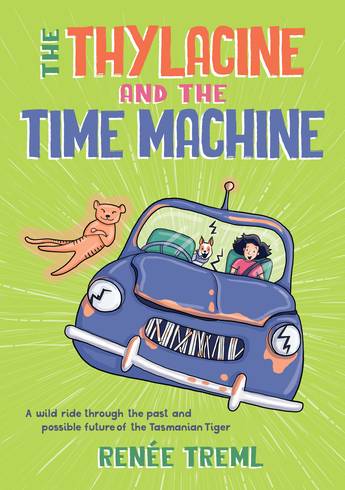
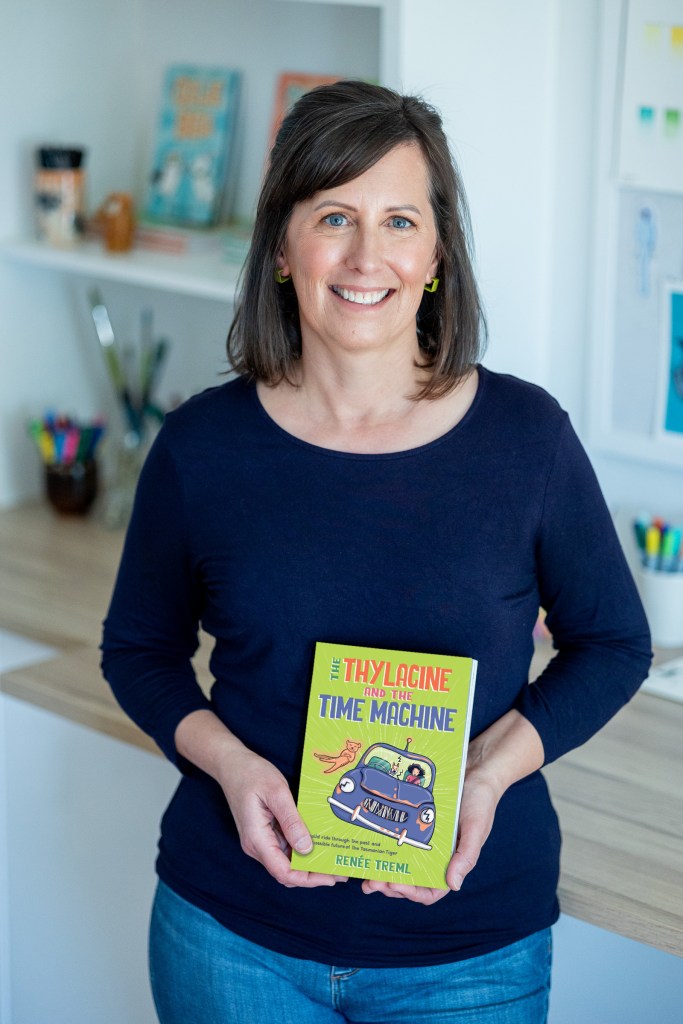
Renée Treml is an award-winning writer and illustrator based in Fremantle, WA. She has written and illustrated several picture books including the award-winning Once I Heard a Little Wombat, and Wombat Big, Puggle Small, which was read on ABC’s Play School. Renée is also the creator of the hilarious graphic novels featuring Sherlock Bones and Ollie and Bea. Today we’re thrilled to be chatting with Renée about her latest graphic novel: The Thylacine and the Time Machine.
From the publisher:
Buckle up! The time-machine awaits! Join twelve-year-old Violet, her dog Tassie and her new friend Thyla – the ghost of the last Tasmanian tiger – on a wild ride to learn all about the legendary, elusive and extinct thylacines. Packed full of fascinating facts about the terrible past and (potentially) exciting future of the Tassie tiger.
What brought you to create a graphic novel about the de-extinction of the thylacine?
I am fascinated by the idea that scientists can bring an animal that no longer exists back to life. It’s like science-fiction except in real life!
Do you have a favourite thylacine fact?
Is it okay if I include a few? Thylacines are fascinating (and very misunderstood) creatures.
Until about 4,000 years ago, thylacines roamed all of Australia … so calling them a ‘Tasmanian tiger’ is a bit limiting. Plus, they are a marsupial, and we humans are more closely related to tigers than thylacines are.
European colonists on Tasmania believed the thylacines were killing their sheep, so they hunted the thylacine to extinction. It turns out bad farming practices, wild dogs, and other humans (thieves!) were to blame. Now we know that thylacines hunted alone and were not big or strong enough to take down an adult sheep.
How do you approach the first draft of a graphic novel? (Do you write the text as prose or a playscript?)
For this graphic novel, I first wrote a summary of what would happen in each chapter, then I drafted the story as a script. My next step was to create the sketches that would accompany the words.
What is the editing process like for a graphic novel? Is the artwork edited as well as the text?
For a graphic novel, we edit both the text and the artwork – and the process is very intertwined (and sometimes messy!) because the words influence the pictures, and the pictures influence the words. We edited The Thylacine and the Time Machine at several stages. Our goal was to catch any major problems in the scripting or sketching stages because that’s when it’s easiest to make changes. We saved the nit-picky grammar and punctuation edits until the very end because I often change and edit the text while I’m drawing.
Can you tell us a bit about what you’re working on next?
I am working on my first collaborative graphic novel mystery series with author Nova Weetman titled Mystery Beach. (Aside note: it is so much fun to co-write with another person!) We were inspired by our beloved childhood series Trixie Belden, Girl Detective, and our stories are set in current-day Australia. The first book will be out in 2026.
The Thylacine and the Time Machine is out now! Ask for it at your favourite bookshop or local library.
AWESOME EXTRAS
Take a sneak peek inside the book
Download the Teachers’ Notes from the publisher’s site (look for the grey button)
Visit Renée Treml’s website for more about her and her books


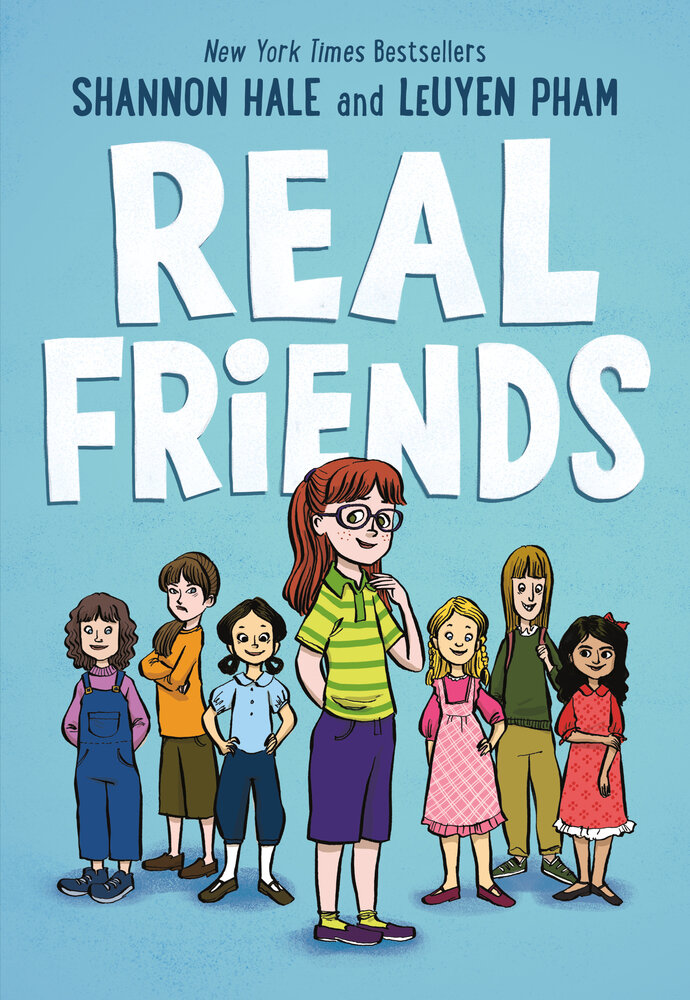

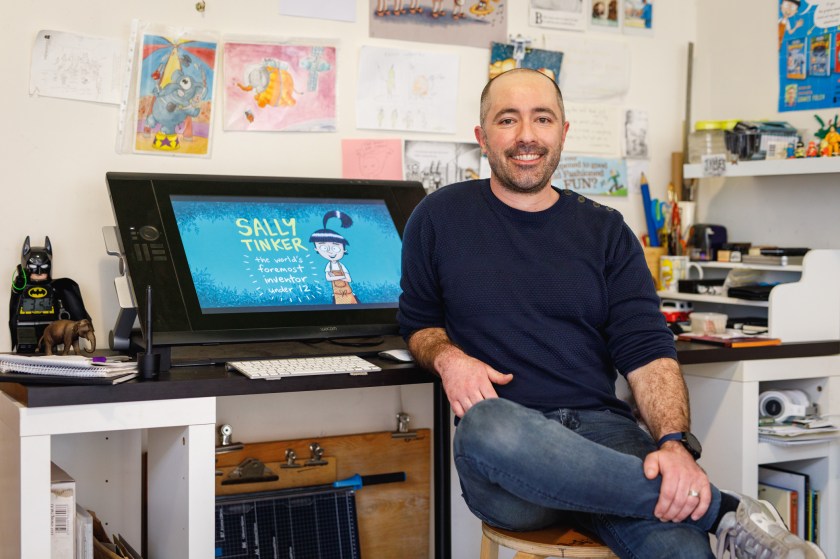
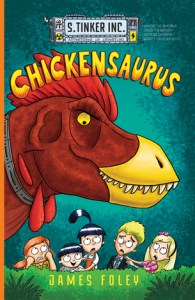 James Foley is a Western Australian author, illustrator and graphic novelist. James uses a variety of materials and tools to create his books: pen and ink, pencil, charcoal and watercolour. He also uses digital tools: Adobe Photoshop, a Wacom graphics tablet, an iPad Pro and the Procreate app. His latest book is the fourth instalment in the hilarious S. Tinker Inc series: Chickensaurus.
 AWESOME EXTRAS:
 alphabetsoup.net.au