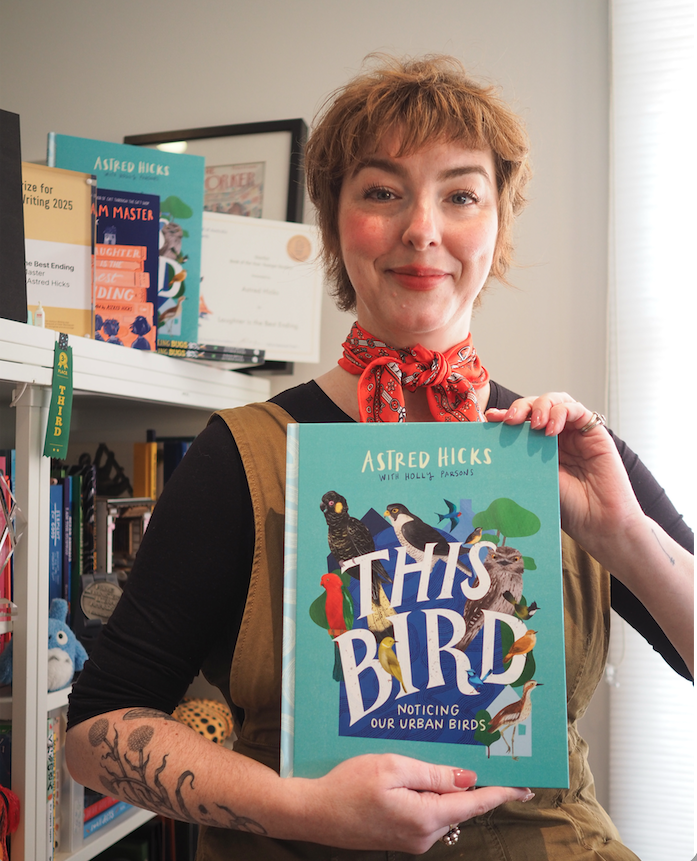

Astred Hicks is a best-selling illustrator, highly awarded book designer, emerging author and complete bird nerd. She is excited about noticing the world around her and hopes to inspire others to do the same.
Dr Holly Parsons is a bird-loving scientist who spends her days studying the amazing Australian bird life that lives in our towns and cities, and sharing her passion with everyone she meets.
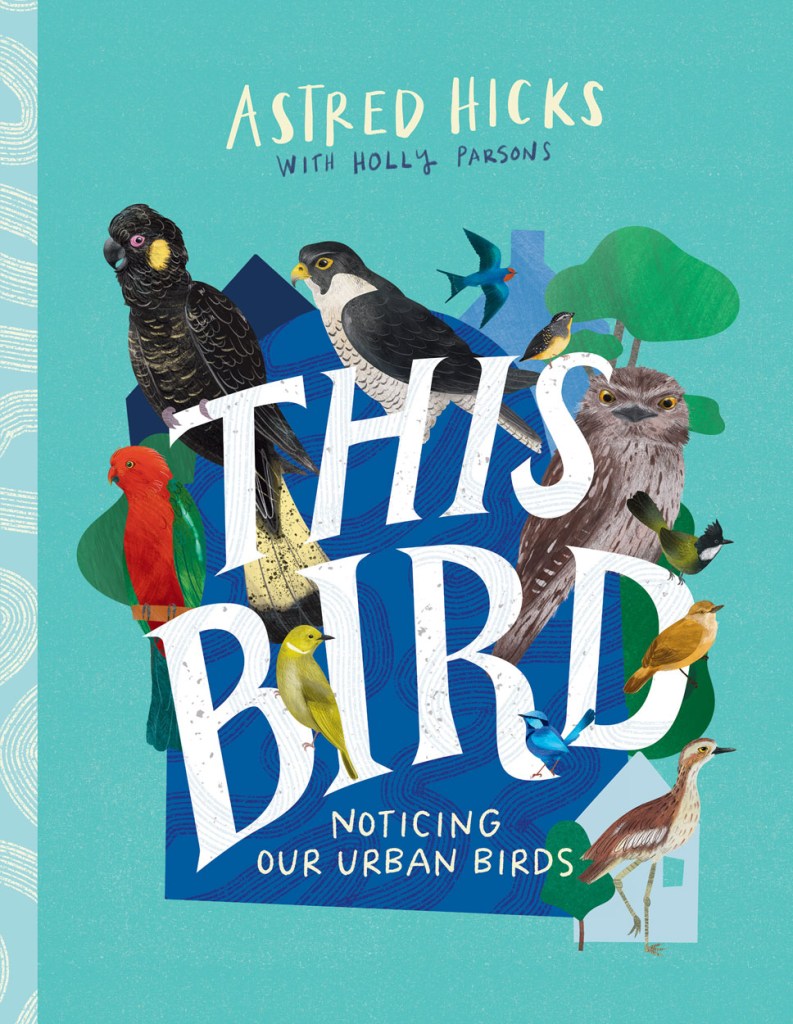
Today we’re thrilled to have Astred and Holly visit Alphabet Soup to talk about their book This Bird: Noticing our Urban Birds.
From the publisher:
What’s so fancy about this bird? What’s so clever about that bird? Perhaps it’s a weightlifter, a marathon flier, an artist, or even a liar. You don’t need to go far to see intriguing birds, even in the city. From colourful parrots to artistic bowerbirds and fancy fairy-wrens, there’s lots to notice in our local backyards, streets and parks. Written by Astred Hicks in collaboration with bird scientist Dr Holly Parsons, and featuring Astred’s distinctive and engaging illustrations, This Bird features fun facts about some remarkable Australian native birds and hints on where (and how) to find them!
CSIRO Publishing provided Alphabet Soup with a reading copy of this book.
What first sparked your passion for birds?
Astred: When I was a kid, my mum was an entomologist (insect scientist) and a birdwatcher who encouraged my siblings and me to notice the wriggly, buzzy, flappy world around us. Our unofficial family crest is a cicada shell, and we would proudly wear them as badges whenever we found one – and still do!
When I had a kid of my own who was even more fascinated by the natural world, I spent even more of my time noticing it. Books, zoos, museums, science fairs, nature walks, parks, hikes, you name it, we did it. Through all this, birds became wonderful flying jewels that captured my gaze and left me wondering. I wanted to see more, find out more, and appreciate the unique lives in my neighbourhood.
Holly: When I was growing up, my dad was always pointing out wildlife and encouraging us to keep our eyes open to what was around us. I already loved animals, so that really stuck with me.
Later, when I went to university and studied biology, I discovered I especially loved ecology, learning about how animals live and interact with the world around them. Then a bird research project came along, and I decided to give it a go.
That’s when everything clicked. I realised how much was going on around me that I’d never noticed before. Every bird behaves a bit differently, and I became really curious about what they were doing and why. That curiosity eventually turned into my job!
How did you decide which birds to include in This Bird?
Astred: It wasn’t easy! That’s for sure! When I first came up with the book, I had a list of birds I thought were fascinating and wanted to write about, like the satin bowerbird (this bird is an artist), powerful owl (this bird is strong) and yellow-tailed black cockatoo (this bird is a cruncher). My publishers, CSIRO Publishing, brought on board ornithologist, Holly Parsons, to consult on the book (and basically make sure I wasn’t just faffing on about how much I love birds). Holly sent through a short list of suggestions, like silver eyes (this bird is a tiny traveller) and spotted pardalote (this bird is a digger), and I instantly knew she got it and that this was going to be a brilliant working relationship. And it was!
But getting the list right turned out to be tricky and a lot of fun.
We had a Google spreadsheet to narrow down the list. I called it ‘The Thunder Dome’; two birds entered, only one left. We needed a good mix of small birds, birds of prey, water birds, and night birds because there are so many birds living in urban areas.
When writing the book, many of my content decisions were informed by my years of experience as a book designer. I wanted the book to be read in several ways: cover-to-cover, dipping in and out, or one spread at a time at bedtime. Non-fiction book design is a real art, so being able to build a design-led, guided reading structure into my manuscript before the actual design started was something I was really excited about.
Holly: We had a lot of fun choosing the birds! We started with a big list and then kind of “battled it out,” putting birds head-to-head and asking, which one would kids be more excited to spot? Which one is weirder? It got a bit competitive!
In the end, we mostly chose birds that live in towns and cities, including some that people might not have heard of yet but could still find nearby. We also made sure to include different types of birds from across Australia, so readers get a mix of shapes, sizes, and habitats.
The hardest part was deciding what to leave out. There’s so much to say about every bird, but we focused on the most interesting and noticeable things, like behaviours you can actually see, or clues that help you recognise them. We wanted each page to feel fun and surprising, not overwhelming.
Do you have a favourite Australian urban bird? Why is it your favourite?
Astred: I do! It’s the yellow-tailed black-cockatoo. Their slow, gliding wingbeats, mournful cries, and seasonal appearance make them feel so magical to see in the wild.
Holly: I actually have two favourites for very different reasons! One is the Superb Fairy-wren, which I studied during my PhD (which lets me put Dr in front of my name – a bird nerd Dr!). They might be small, but they have huge personalities. The bright blue males are so colourful and they live as little families with the brown females and young birds, but what I love most is how busy and social they are – you’ll often see them hopping around in these groups, constantly chatting to each other.
My other favourite is the Powerful Owl. They’re Australia’s largest owl, and I find it amazing that such a big, powerful predator is living in some of our east coast cities. In a way, they shouldn’t really be able to survive in urban areas, but they do, and that makes them incredibly special.
What’s one thing you wish all young readers knew about Australian urban birds?
Astred: They are living their lives alongside you, with rich experiences and many things happening. They deserve space and respect as well.
Holly: I’d love young readers to know that birds are sharing our cities with us, and they’re noticing us just as much as we’re noticing them. Once you start paying attention, you realise cities are full of wildlife. Each capital city in Australia has HUNDREDs of different bird species you can spot. And the really exciting part is that people can make a difference. Small actions like planting native plants or keeping cats indoors can help birds thrive. Everyone can do something for the birds that share their spaces.
Do you have a tip for someone who doesn’t know much about our urban birds yet but would like to start noticing/birdwatching?
Astred: Begin by looking up, then look down. It may sound funny, but looking up helps you spot birds like the swallow dipping and diving for insects over the football oval. But looking down can reveal larger birds by their droppings. Tawny frogmouths are difficult to see in trees, but you might find them by spotting white droppings at a tree’s base. Listening for birds and learning their calls can always help you discover the variety of species living nearby.
Holly: Start by slowing down and really looking and listening. You don’t need any special equipment. Pick one bird you see often and watch what it does – where it goes, what it eats, whether it’s alone or in a group.
All these birds are going about their daily lives, just like you are. They are finding food, talking to each other, looking after their families. When you start noticing that, it becomes really fun, almost like you’re watching little stories play out.
Even a really common bird like the Australian Magpie can be fascinating if you take the time to watch it closely. The more you notice, the more interesting it becomes.
This Bird: Noticing our urban birds is out now! Ask for it at your favourite bookshop or local library.
AWESOME EXTRAS:
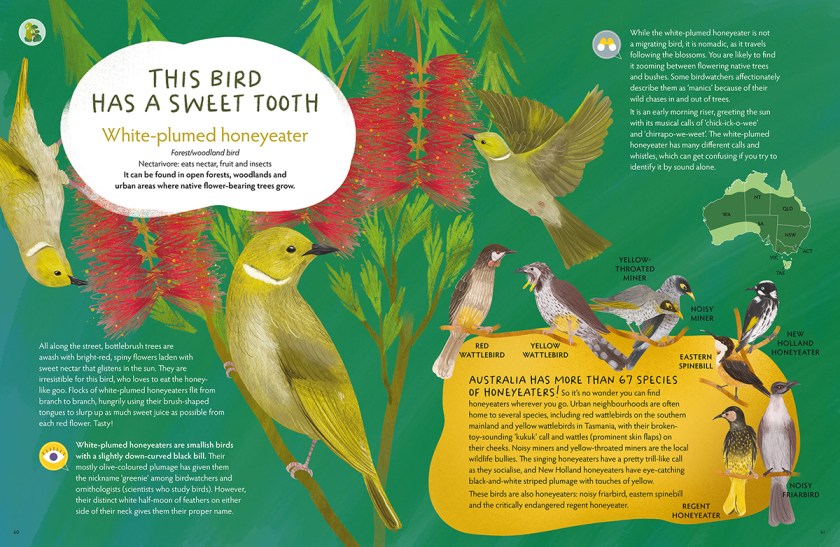
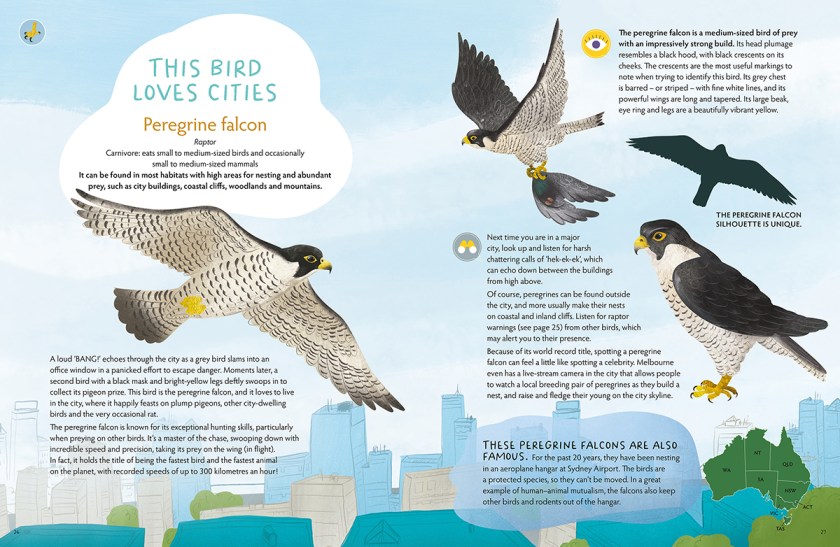
Take a peek inside the pages of This Bird

 R
R
