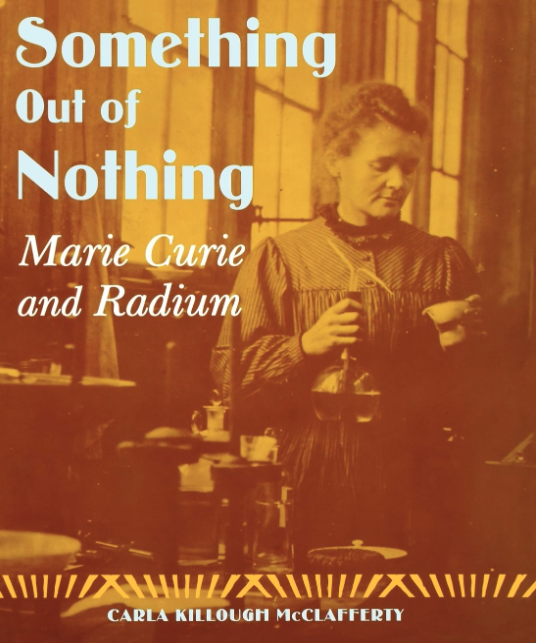
Something Out of Nothing: Marie Curie and Radium by Carla Killough McClafferty, St Martins PR (USA), ISBN 9780374371227
REVIEWED BY JIYA KAUR, 10, USA
Jiya Kaur reviewed her own copy of this book.
Something Out of Nothing teaches readers about Marie Curie, a marvelous scientist who discovered Radium and Polonium. Born as Manya Sklodowska on November 7th, 1867, she would soon grow up to become one of the world’s most revered scientists. She went from a poor Polish girl who worked as a governess, to the first woman and Polish person to ever win a Nobel Prize. This book will take you through the heartbreaking and hopeful journey of Marie Curie.
My favourite chapter in this book is when Marie starts to work as a governess to help her sister Bronya pay for college. They create an agreement to help the other pay for college, working in their motherland, Poland, until the other can pay to study at the Sorbonne in Paris, France. When Marie first arrives in France, she feels free and carefree. I like the quote “All that I saw and learned that was new delighted me. It was like a new world opened to me.” I love this quote because Marie feels free, joyous, and can’t wait to get started in the beautiful city she would soon call home.
I believe that readers ages 9 to 11 will enjoy this book. I would rate it 10/10 stars. I think this book is very emotional, so readers might prefer other reads if they want something continuously delightful and carefree.
Readers who love books about science, or the I Survived series will love this book. In all, Something Out of Nothing is a fabulous book by Carla Killough McClafferty that will teach readers about an exceptional scientist: Marie Curie.
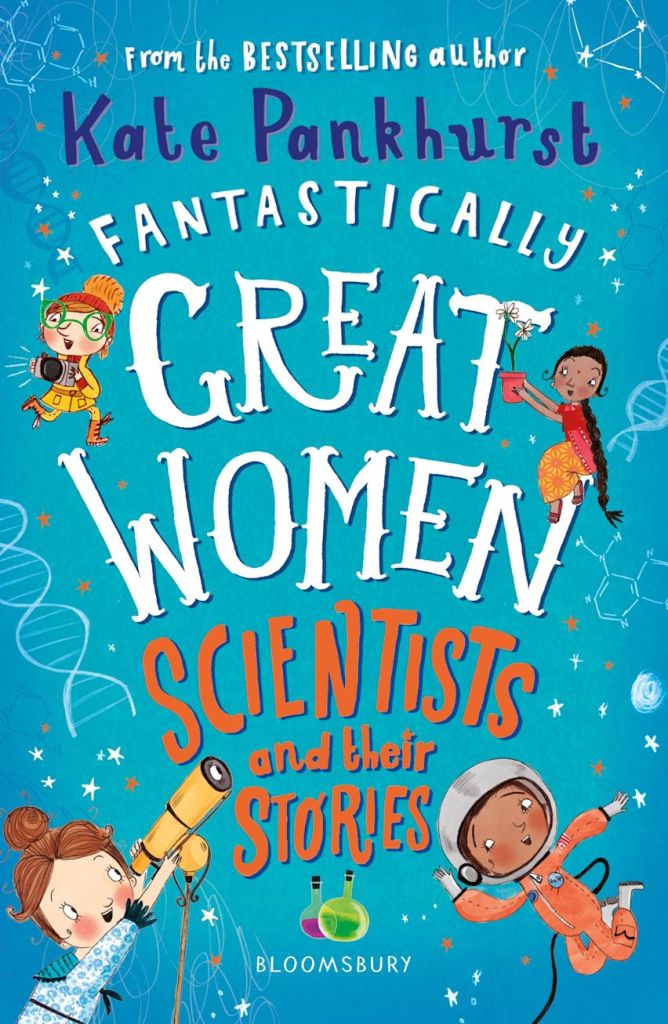
Fantastically Great Women Scientists and their Stories by Kate Pankhurst, Bloomsbury Publishing, ISBN 9781526615336
REVIEWED BY JIYA KAUR, 10, USA
Jiya Kaur reviewed her own copy of this book.
Fantastically Great Women Scientists and their Stories by Kate Pankhurst is a book that teaches the reader about extraordinary female scientists. Some of them include Marie Curie, Mae Jemison, and Rosalind Franklin. This book explores the challenges they faced, and also teaches you other things about their life; what they dreamed of as a kid, their inspiration, and more. This book is excellent because it shares surprising facts and motivational stories about legendary women.
My favorite chapter in this book is about Caroline Herschel, a terrific astronomer. She worked as a maid at home, until her brother brought her to his own house, where she became a soprano singer. When her brother shifted his focus to astronomy, she did too.
Fantastically Great Women Scientists and their Stories is a stellar book that teaches you that anyone can do anything, and to follow your dreams. I recommend it for anyone ages seven to ten, and I rate it five out of five stars. This book is inspirational, and it also reminds us that the most extraordinary people overcome difficult obstacles. All these women were really amazing, so take up the chance to learn about them.
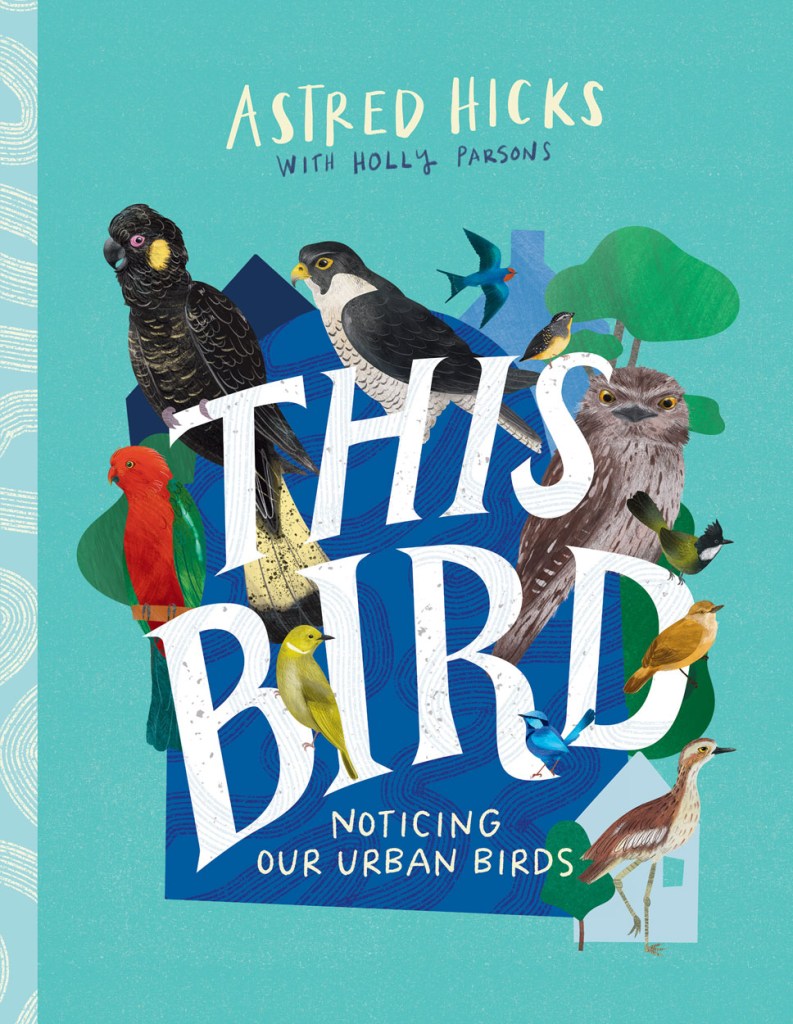
This Bird: Noticing Our Urban Birds by Astred Hicks with Holly Parsons, CSIRO Publishing, ISBN 9781486318452
REVIEWED BY MARLEY, 10, WA
Marley received a review copy of this title from the publisher.
From the publisher:
What’s so fancy about this bird? What’s so clever about that bird? Perhaps it’s a weightlifter, a marathon flier, an artist, or even a liar. You don’t need to go far to see intriguing birds, even in the city. From colourful parrots to artistic bowerbirds and fancy fairy-wrens, there’s lots to notice in our local backyards, streets and parks.
This Bird: Noticing Our Urban Birds is a great factual text book about birds. It explains everything from funny details to extraordinary facts that you would never find just reading on the internet. I loved and enjoyed reading this book very dearly. It has great illustrations with an eye for detail.
It would be good for any age, for anyone interested in wildlife. I read about the willie wag tail, which is my favourite bird, and I think it would be a great reference book for local wildlife.
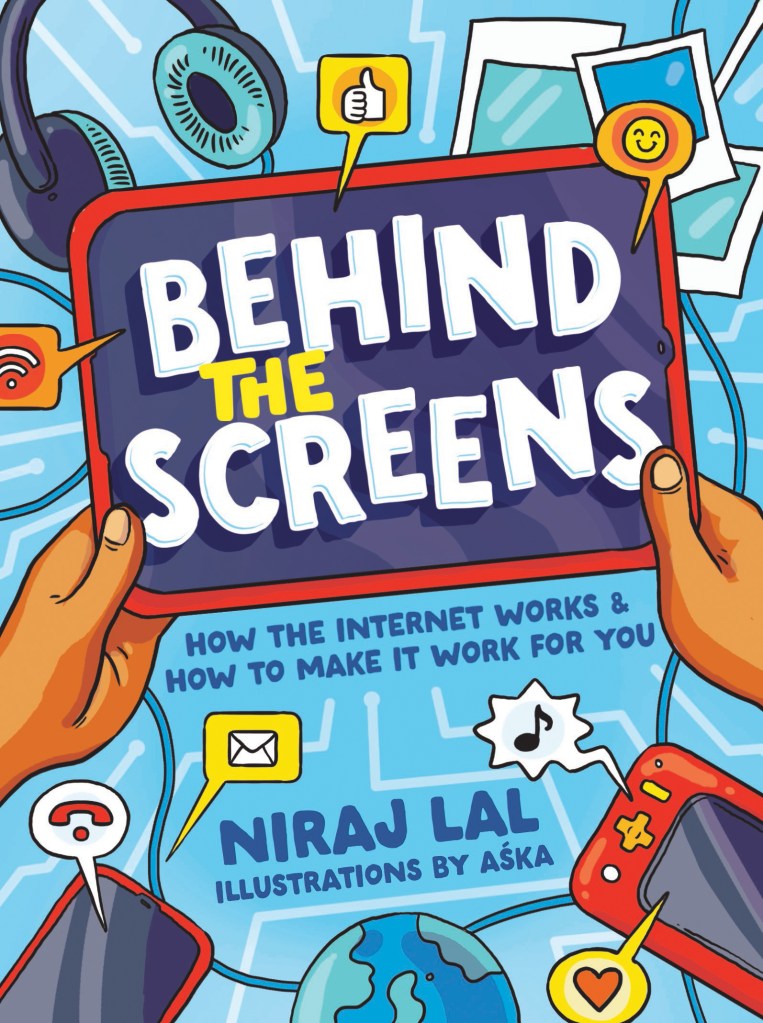
Behind the Screens: How the Internet Works & How to Make It Work For You by Niraj Lal, illustrations by Aśka, University of Queensland Press, ISBN 9780702268946
Behind the Screens is about technology and how to navigate it. I really liked how detailed and kid-friendly the book is.
I learnt a lot about tech and how to make it kid-safe, and also how to be safer on the internet. I think this book would be good for any kids who like tech and want to learn more about it, especially ages 9+.
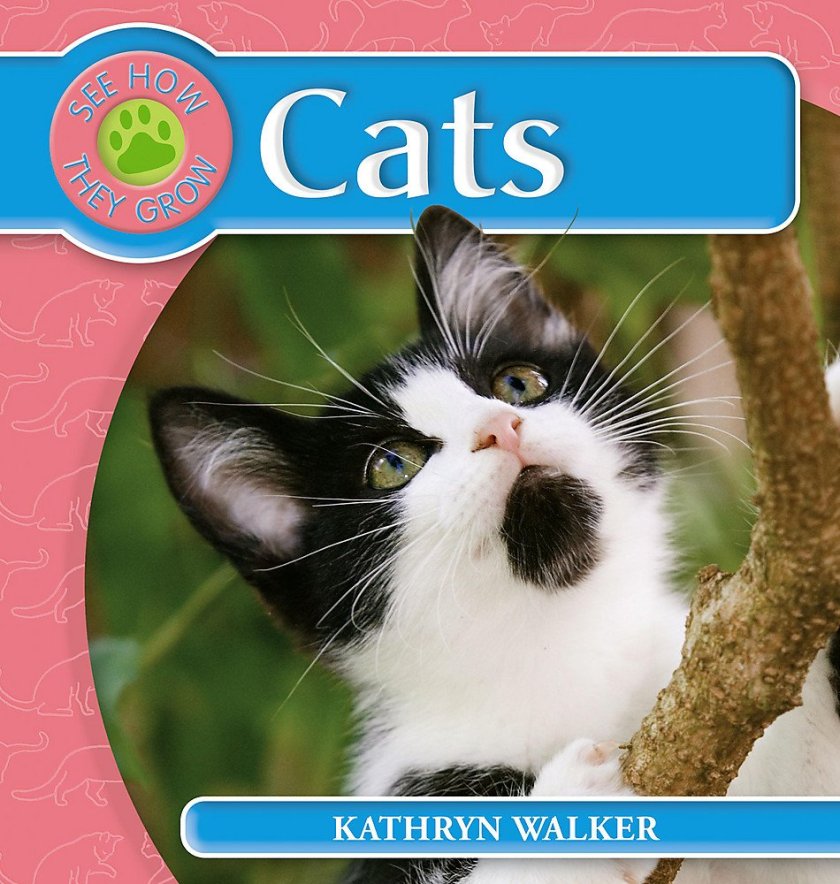
Cats by Kathryn Walker, Wayland Publishers, ISBN 9780750268578
REVIEWED BY FRANKIE, 7, NSW
Cats by Kathryn Walker is an information book about many different types of cats.
This book has adorable, cute photographs that kids would love. The more you read the more you can learn about cats.
The best thing about this book is learning about how cats act so if they behave a certain way you know if they are happy or angry.
In the book cats there are little facts about cats. For example, there is one that says “Most cats love to climb. Their strong muscles and sharp claws make them good climbers.” There are many other amazing facts you can learn from this book. This book is quite old but you can find similar information books about cats at your library.
The only part I disliked in this book was a photograph of a cat and a crow because the cat could fall or the crow could eat the cute kitten.
On the contents page, it has cool headings like ‘A Kitten is Born’ which sounds really cute and interesting. At the end it has an interesting index to look for topics in the book.
Cats made me interested in getting a cute little cat. I am rating it 5 out of 5!
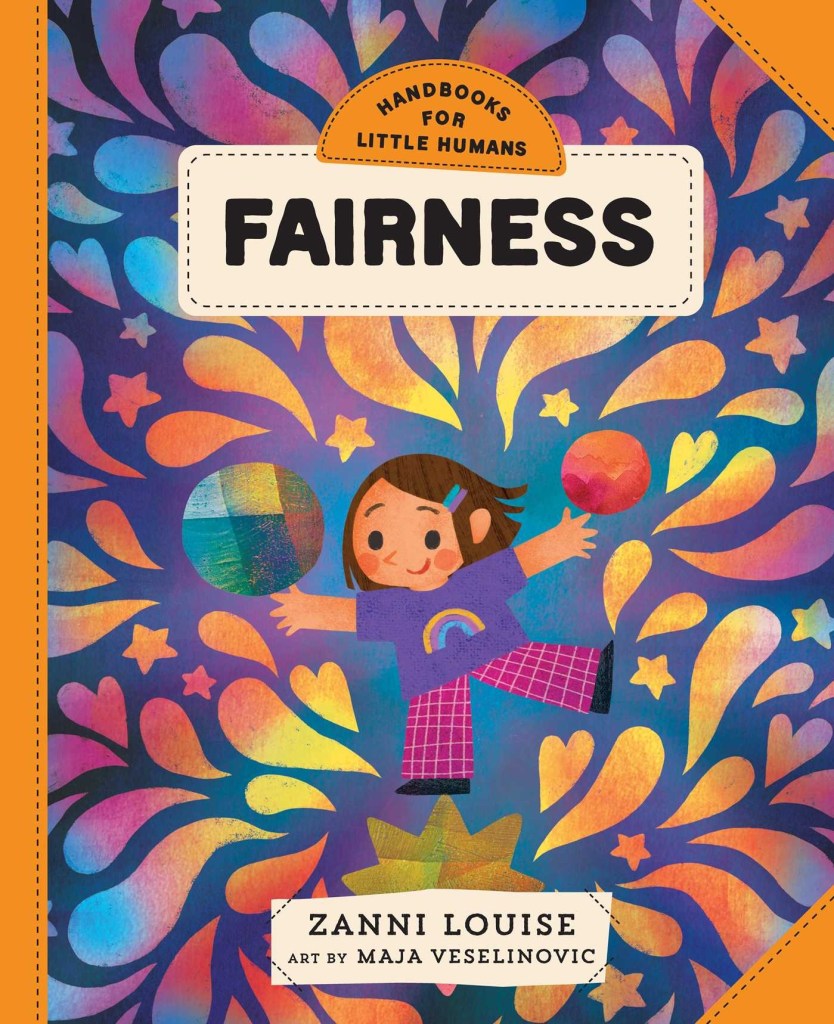
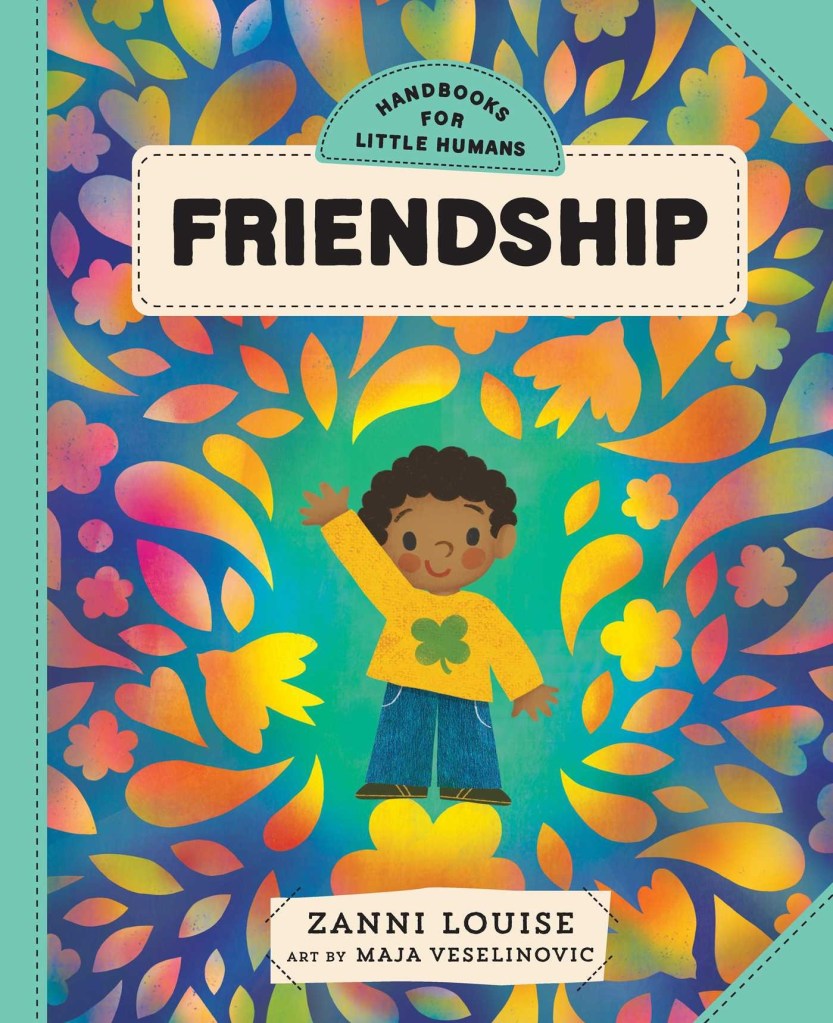
Zanni Louise has been writing stories since she was little, growing up in country NSW. She’s written over fifty internationally published books for kids including picture books, chapter books and books for 10–12 year-olds. Today we’re chatting to her about the latest books in her Handbooks for Little Humans series. You can see the two latest books in the series above – Fairness and Friendship – both illustrated by Maja Veselinovic.
From the publisher:
Phew. There’s a lot to know about being a human, right? You have so many things to learn, like: swimming in the big pool, spelling your name and the words and actions to your favourite song. This is a series to guide meaningful conversations about the things that count most.
Simon & Schuster provided reading copies of these books.
So far in this series you’ve written handbooks for Compassion, Confidence, Inclusion, Integrity, Fairness and Friendship. What brought you to write the Handbooks for Little Humans series?
I have been talking with kids in classrooms for years about important topics like honesty, integrity, creativity and persistence. I wanted to make fun, engaging guidebooks that built on these conversations and gave classrooms and families a structure, so that they could continue this dialogue with their little people. We have guidebooks for how to light a fire and use a vacuum cleaner. Why not a guidebook for how to be human?
The books include information, guidance and tips for readers. How did you gather your information? How do you decide what to put in … and what to leave out?
It’s a tricky finding the balance between enough information and making it concise and simple enough to be engaging. I think hard about the topic, like “What is integrity? To me?” I think of examples in my own life and how the topic impacts me. I research online. I talk with kids. I talk with teachers and librarians. For Inclusion, I spoke with a disability advocate. Once I form a clear idea about the topic, I experiment with the best way of articulating the theme so it appeals to kids.
The illustrators across the series – Maja Veselinovic, Kim Drane and Jingting Wang – have included brightly coloured illustrations, comics, diagrams and checklists. Did you meet with your illustrators to work on the books? When you send the text for the comics sections do you present it differently from the text of the main pages?
I’ve never met any of these illustrators. I send my text to my editors, then they brief the illustrator. I am sent ‘roughs’, which are sketches of the whole book. I give feedback on these. We go back and forth a couple of times. I want to give the illustrators plenty of freedom to play with the concepts as much as they’d like to. I want it to be fun for them and for the illustrations to have their personality. They’re the creative talent behind the visuals. For the comics, I lay out the text and give a few stage directions. I suggested the animals once or twice, but also said, “Feel free to pick your own.” It’s important that the illustrator feels ownership over the project.
How do you hope these Handbooks are read and used?
I hope they are conversation starters. I hope they plant a seed in kids’ minds, and give homes and classrooms accessible ways of talking about complicated themes. I hope they can lay a pathway for being kinder and better to one another, so we can create a more harmonious society. It sounds lofty, but I truly believe books have this power. I had many messages from readers of my earlier series, Human Kind, telling me how kids electively pulled the books from the shelves and read them in their own space and time. Later, they would chat about the topic with their parent, and reflect on how they were persistent, honest, etc.
Having spent lots of time with kids over the years, I’ve learnt never to underestimate their interest in and ability to talk about big topics. Nor should we every underestimate their capacity for humanness. Us adults could learn a lot!
Can you tell us a bit about what you’re working on next?
A lot! This week, I am jumping between drafts of two novels (I have never done that before, but it’s fun, and it’s working, so I’m not going to complain!). I have several more books coming out later this year that I’ve been editing and proofing. I’m just happy to go wherever the ideas take me.
The Handbooks for Little Humans series is out now! Ask for it at your favourite bookshop or local library.
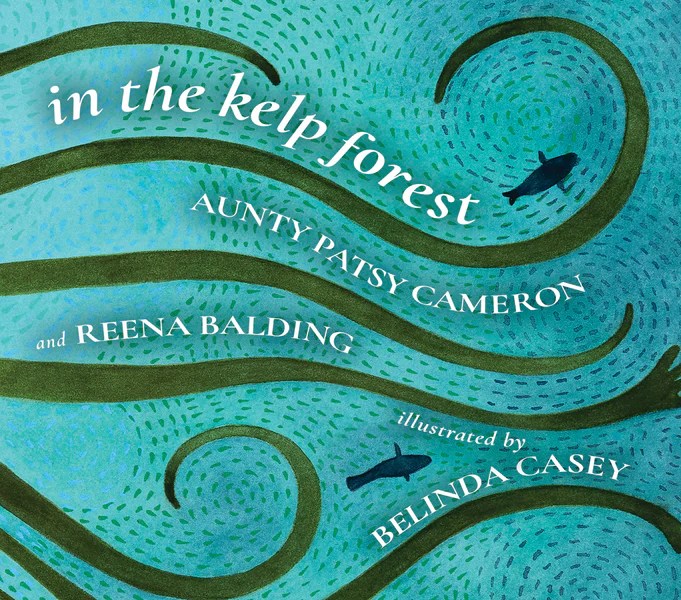
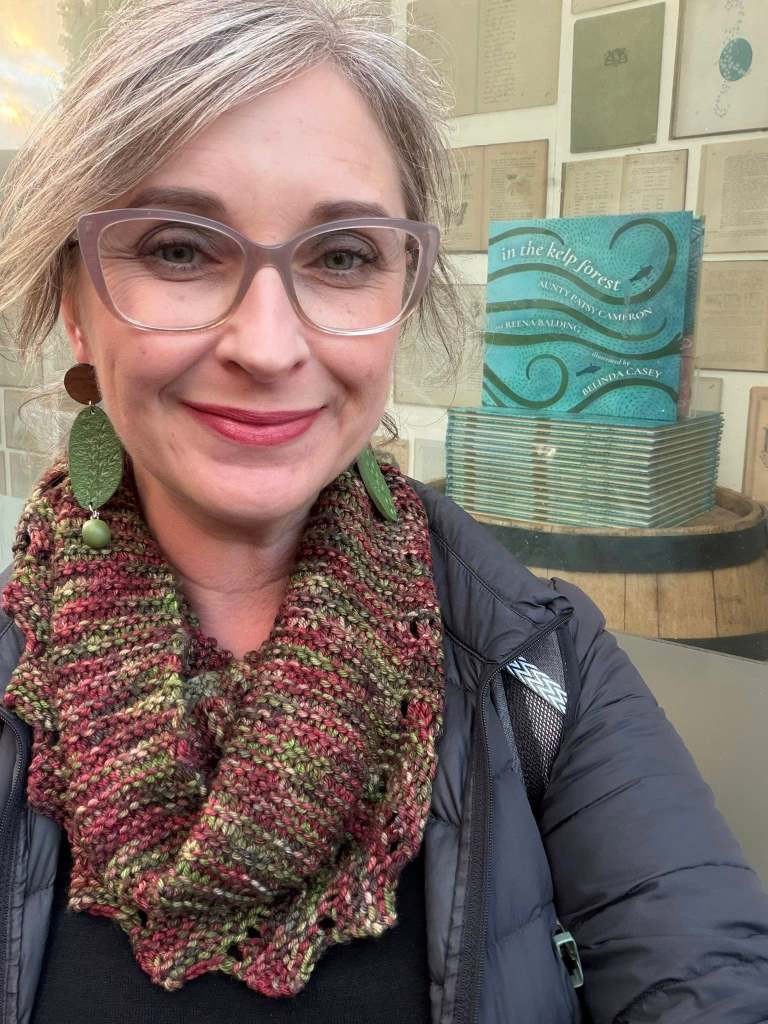
Today we’re chatting to the three creators of this stunning picture book, In the Kelp Forest, written by Aunty Patsy and Reena and beautifully illustrated by Belinda.
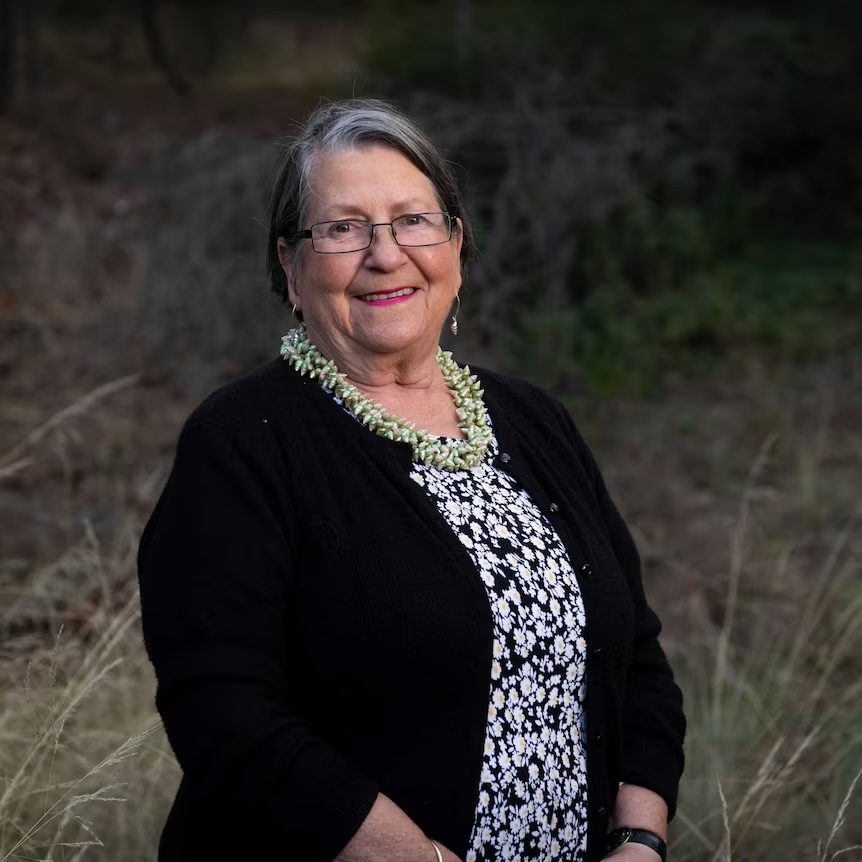
Aunty Patsy Cameron grew up on Flinders Island and can trace her Aboriginal heritage through her mother’s line to four Ancestral grandmothers; Pleenpereener, Wyerlooberer, Teekoolterme and Pollerelbrener. At the head of her family is Teekoolterme’s father, the revered Pairrebeenne/Trawlwoolway Clan leader, formidable warrior and seer, Mannalargenna.
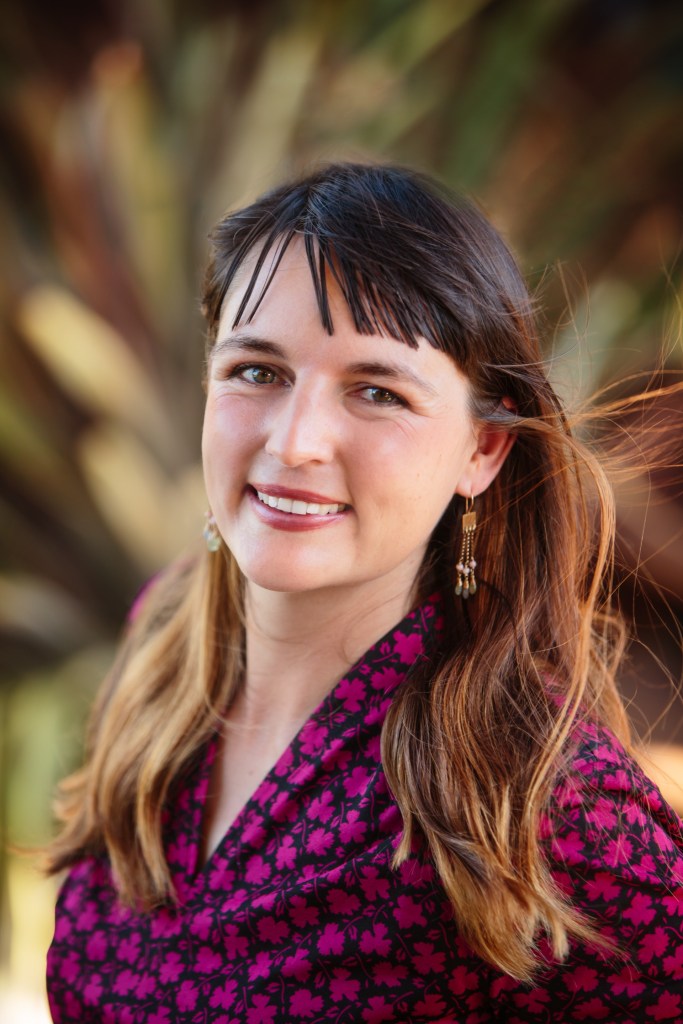
Reena Balding grew up in Tasmania and left to travel the world where she worked for a newspaper in Turkey and became a yoga instructor in Bali. Now living with her family in Hobart, Reena publishes books for the Australian government and writes for children and adults.
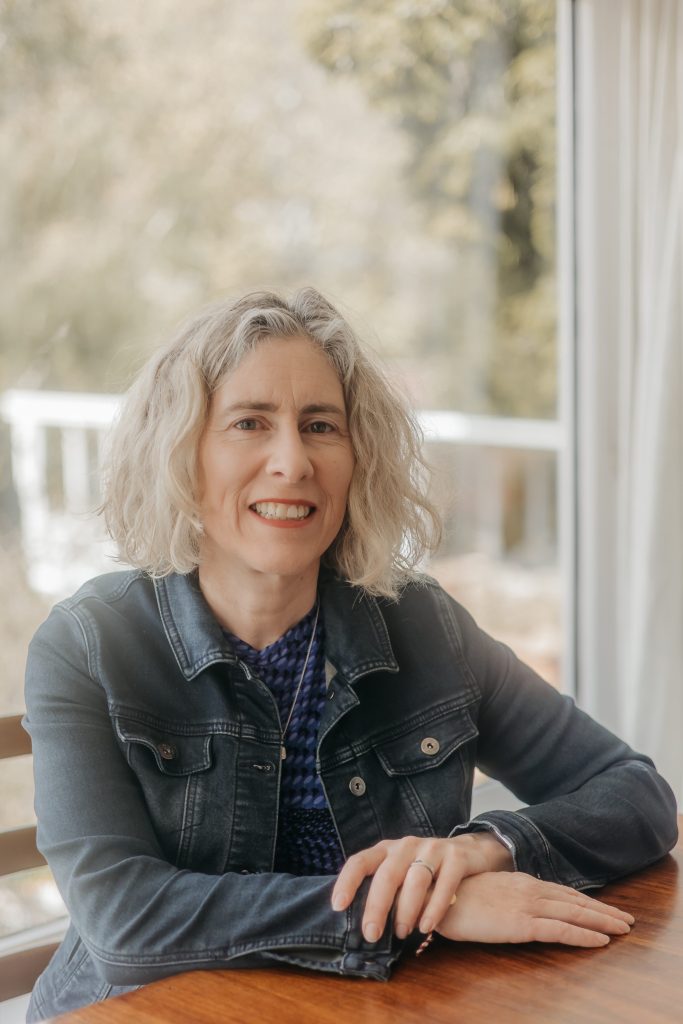
Belinda Casey is a proud great granddaughter of legendary Tasmanian Aboriginal woman, Fanny Smith, whose traditional homeland is Tebrakunna Country in North Eastern Trouwerner/Tasmania. Belinda’s art practice honours the legacy of her ancestral grandmother and the strength and resilience of the Tasmanian Aboriginal people, their culture and connection to Country.
In the Kelp Forest explores the beauty and strength of Country beneath the waves and celebrates the living kelp forests, their creatures, and deep Cultural knowledge of Tasmania’s First Nations people. Kelp forests have intricate lives and play a key role in the balance of our oceans and seas. Myerlee, the giant kelp, sways beneath the waves, her forests alive with creatures that make her their home. Myerlee lives with the elements, shelters life, provides sustenence to those on the land and in the ocean and whispers her secrets to those who will listen.
Magabala Books provided Alphabet Soup with a reading copy of this book.
How did you collaborate on the writing of In the Kelp Forest? Did you work on it together or was there some back and forth between you on the text?
Aunty Patsy and Reena: We started by meeting on Country on a beach on the east coast of Tasmania. Aunty Patsy pointed out which parts of the kelp are good to collect. Then we talked about kelp and the different properties and importance of kelp. We also made various things out of kelp. Reena researched the different species of kelp and the life cycle of kelp and talked to kelp experts about what to include. Aunty Patsy researched the historic records of how kelp had been used and the different words for sea animals that lived in or around kelp forests. Then we put it all together.
What’s one thing you would like kids to know about kelp in Australian waters?
Aunty Patsy and Reena: Tasmanian Aboriginal people have used bull kelp (myerlee) for many, many years to make into useful things. The kelp is washed up onto beaches where it can be collected. When it is still wet and pliable it can be cut and made into baskets to carry water in. And also made into … shoes! There are historic records of people wearing a kelp shoe when they had a sore foot. We experimented with a piece of kelp and some string to see if a shoe really could be made from kelp, and it worked!
When fresh, kelp can be roasted over coals and eaten as a rich source of nutrients. This includes medicinal uses such as iodine that is good for your thyroid.
The book includes words from Oyster Bay nation language, Coastal Plains nations language, and Tyereelore language. How did you gather these words? Do you speak any of these languages yourselves?
Aunty Patsy: I grew up on Flinders island in eastern Bass Strait where Tyereerlore language was passed down across the generations for some shells and resources. I also have direct ancestral connections with Oyster Bay and Coastal Plains nations and use their words recorded in the 1800s in my writing and on occasions such as presenting Welcome to Country and when referring to place names and names for plants and animals.
Can you tell us about the watercolour illustrations for In the Kelp Forest?
Belinda: I had a marvellous time creating the illustrations for In the Kelp Forest. I’m a painter and usually work on quite large-scale canvases in oil paint and mixed media … I hadn’t really painted with watercolours before, so I more or less taught myself how to use them throughout the creation of the book. I chose watercolour for their portability but also their suitability to the book’s watery theme. I also love bluey greens, so I relished the opportunity to go crazy with my favourite colours! I broke my painting hand four weeks into the project, so while I was out of action I went and stayed at Bicheno on the east coast of Tassie for a few nights and photographed the kelp washed up on the beaches. I also videoed the kelp holding fast to the rocks and observed how it moved in the water. I then took my research material (plus a few specimens that I had collected) back to my studio and created the drawings partly from these images and partly from my imagination!
Can you tell us a bit about what you’re working on next?
Aunty Patsy: I am currently working on ideas for another children’s story about the moon and its significance to the lifeworld of Tasmanian Aboriginal people from deep time to the present day.
Reena: I would love to write a book about Tasmania’s weird and wonderful facts and stats. I also think there need to be more books about fascinating plants. Basically, there are too many ideas for non-fiction kids books and not enough time to write them all!
Belinda: I’m currently working on a series of large-scale mixed-media paintings inspired by objects found along the coastline of Bruny Island, so in a way I’m continuing with the watery themes of In the Kelp Forest. ☺️
In the Kelp Forest is out now! Ask for it at your favourite bookshop or local library.
Sharon Dalgleish has over 50 published books for children and worked for many years as a librarian, and then as a teacher. She now spends her days writing stories, non-fiction and poetry for children.
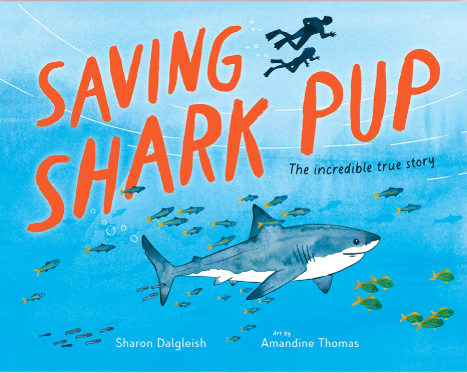
Sharon lives in Sydney with Maisie, her rescue dog/office assistant. Today we’re chatting with Sharon about her picture book with Amandine Thomas: Saving Shark Pup: The Incredible True Story.
From the publisher:
When a great white shark pup washed up on Manly Beach, the local community rushed to the shark’s rescue, eventually releasing it back into the ocean. Great white sharks are vital for the ocean ecosystem, and yet despite this, their beauty and mystery are rarely celebrated. This glorious picture book is a lyrical and emotive account of the shark pup’s journey back to the ocean, interspersed by fascinating facts about great white sharks.
The publisher provided Alphabet Soup with a reading copy of this book.
Saving Shark Pup is based on an actual rescue. How did you first hear about the shark pup that washed up on Manly Beach?
I was living in Manly when the shark pup washed up on the beach, so it was like it happened right in my own backyard. My daughter and her friends were at the beach and saw it all. They phoned to tell me – but I was at work and couldn’t rush to the beach. So, they sent me video updates!
The shark (nicknamed Fluffy) made me think differently about sharks and stayed in my heart for years. As I walked along the beach up to the headland lookout each morning, I would scan the ocean, wondering if it had survived and where he might be now. Great whites can live for over sixty years, so I’ll be looking for a long time!
I was sure someone would write Fluffy’s story. But no one did. Eventually, I sat down to try to capture his story on the page myself … hoping my words would inspire others to think differently about sharks, too.
The book includes facts about great white sharks as well as the tale of the shark pup’s rescue. How did you do your research about great white sharks?
I read everything I could find about great white sharks, in books and on scientific websites. It was particularly hard to find information about how great white sharks are born! Scientists are still trying to discover this. The best part of the research was making contact with and interviewing one of the aquarists who rescued the shark. She stayed by his side throughout the rescue – over twenty-four hours in the water with no sleep and wearing heavy equipment. She also read my final manuscript to make sure all the facts were correct. And she was VIP guest at the book launch party!
Did you work with the illustrator Amandine Thomas in the creation of the book? Or did you each work on the text and illustrations separately?
Amandine created her amazing art after my text was completed. When I first saw her art, I couldn’t believe how she had captured the colours, emotion, movement and even the sounds of the rescue. And how she has added so much to the story with every spread showing a different angle or perspective. We have never met in person (she is in Melbourne and I am in Sydney) but she did come to the book launch party via video! It was so special.
You’ve dedicated the book to the Sea Life Sanctuary Rescue Team. Can you tell us about that?
They worked with extraordinary teamwork, trying different ideas and never giving up. By the end of the rescue, they were overwhelmingly exhausted but also in awe of being in the presence of such a majestic animal. Great white sharks can be dangerous. And this one was stressed and in a confined space. But not once during the rescue did any of the divers feel threatened by Fluffy. They felt honoured to be able to help this magnificent wild creature. To me they are heroes!
Can you tell us a bit about what you’re working on next?
I’m working on another nonfiction picture book. I adore poetic, lyrical writing. But I love silly humour, too. So, I’m having loads of fun working on a few funny picture books. I’ve also drafted an outline for a Chapter Book series. It’s about a character who always gets things wrong. I’ve written the first book and now planning the next two books.
Saving Shark Pup: The Incredible True Story is out now! Ask for it at your favourite bookshop or local library.
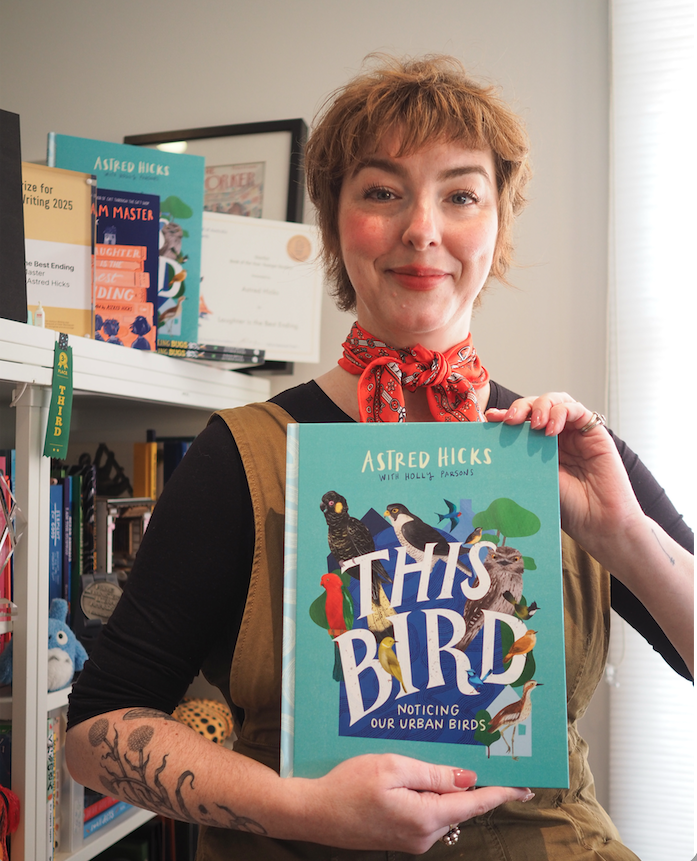
Astred Hicks is a best-selling illustrator, highly awarded book designer, emerging author and complete bird nerd. She is excited about noticing the world around her and hopes to inspire others to do the same.
Dr Holly Parsons is a bird-loving scientist who spends her days studying the amazing Australian bird life that lives in our towns and cities, and sharing her passion with everyone she meets.
Today we’re thrilled to have Astred and Holly visit Alphabet Soup to talk about their book This Bird: Noticing our Urban Birds.
From the publisher:
What’s so fancy about this bird? What’s so clever about that bird? Perhaps it’s a weightlifter, a marathon flier, an artist, or even a liar. You don’t need to go far to see intriguing birds, even in the city. From colourful parrots to artistic bowerbirds and fancy fairy-wrens, there’s lots to notice in our local backyards, streets and parks. Written by Astred Hicks in collaboration with bird scientist Dr Holly Parsons, and featuring Astred’s distinctive and engaging illustrations, This Bird features fun facts about some remarkable Australian native birds and hints on where (and how) to find them!
CSIRO Publishing provided Alphabet Soup with a reading copy of this book.
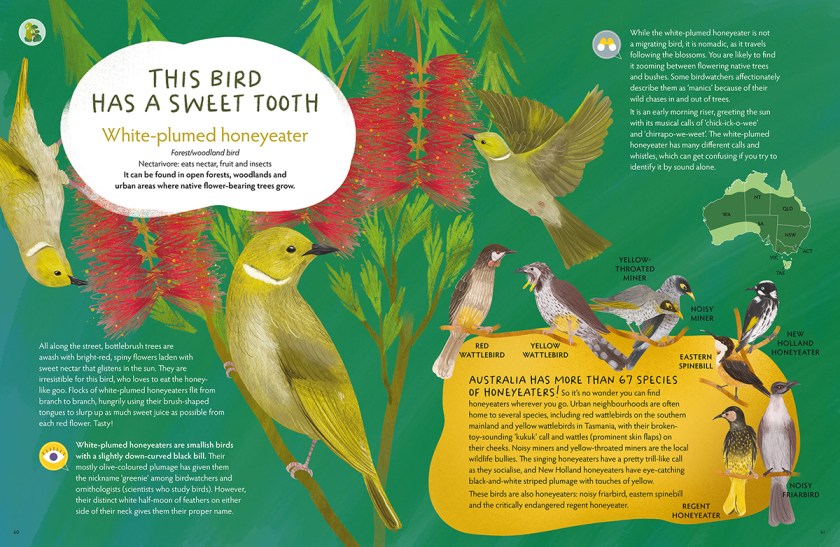
This bird has a sweet tooth: White-plumed honeyeater (from This Bird, illustrations by Astred Hicks).
What first sparked your passion for birds?
Astred: When I was a kid, my mum was an entomologist (insect scientist) and a birdwatcher who encouraged my siblings and me to notice the wriggly, buzzy, flappy world around us. Our unofficial family crest is a cicada shell, and we would proudly wear them as badges whenever we found one – and still do!
When I had a kid of my own who was even more fascinated by the natural world, I spent even more of my time noticing it. Books, zoos, museums, science fairs, nature walks, parks, hikes, you name it, we did it. Through all this, birds became wonderful flying jewels that captured my gaze and left me wondering. I wanted to see more, find out more, and appreciate the unique lives in my neighbourhood.
Holly: When I was growing up, my dad was always pointing out wildlife and encouraging us to keep our eyes open to what was around us. I already loved animals, so that really stuck with me.
Later, when I went to university and studied biology, I discovered I especially loved ecology, learning about how animals live and interact with the world around them. Then a bird research project came along, and I decided to give it a go.
That’s when everything clicked. I realised how much was going on around me that I’d never noticed before. Every bird behaves a bit differently, and I became really curious about what they were doing and why. That curiosity eventually turned into my job!
How did you decide which birds to include in This Bird?
Astred: It wasn’t easy! That’s for sure! When I first came up with the book, I had a list of birds I thought were fascinating and wanted to write about, like the satin bowerbird (this bird is an artist), powerful owl (this bird is strong) and yellow-tailed black cockatoo (this bird is a cruncher). My publishers, CSIRO Publishing, brought on board ornithologist, Holly Parsons, to consult on the book (and basically make sure I wasn’t just faffing on about how much I love birds). Holly sent through a short list of suggestions, like silver eyes (this bird is a tiny traveller) and spotted pardalote (this bird is a digger), and I instantly knew she got it and that this was going to be a brilliant working relationship. And it was!
But getting the list right turned out to be tricky and a lot of fun.
We had a Google spreadsheet to narrow down the list. I called it ‘The Thunder Dome’; two birds entered, only one left. We needed a good mix of small birds, birds of prey, water birds, and night birds because there are so many birds living in urban areas.
When writing the book, many of my content decisions were informed by my years of experience as a book designer. I wanted the book to be read in several ways: cover-to-cover, dipping in and out, or one spread at a time at bedtime. Non-fiction book design is a real art, so being able to build a design-led, guided reading structure into my manuscript before the actual design started was something I was really excited about.
Holly: We had a lot of fun choosing the birds! We started with a big list and then kind of “battled it out,” putting birds head-to-head and asking, which one would kids be more excited to spot?Which one is weirder? It got a bit competitive!
In the end, we mostly chose birds that live in towns and cities, including some that people might not have heard of yet but could still find nearby. We also made sure to include different types of birds from across Australia, so readers get a mix of shapes, sizes, and habitats.
The hardest part was deciding what to leave out. There’s so much to say about every bird, but we focused on the most interesting and noticeable things, like behaviours you can actually see, or clues that help you recognise them. We wanted each page to feel fun and surprising, not overwhelming.
Do you have a favourite Australian urban bird? Why is it your favourite?
Astred: I do! It’s the yellow-tailed black-cockatoo. Their slow, gliding wingbeats, mournful cries, and seasonal appearance make them feel so magical to see in the wild.
Holly: I actually have two favourites for very different reasons! One is the Superb Fairy-wren, which I studied during my PhD (which lets me put Dr in front of my name – a bird nerd Dr!). They might be small, but they have huge personalities. The bright blue males are so colourful and they live as little families with the brown females and young birds, but what I love most is how busy and social they are – you’ll often see them hopping around in these groups, constantly chatting to each other.
My other favourite is the Powerful Owl. They’re Australia’s largest owl, and I find it amazing that such a big, powerful predator is living in some of our east coast cities. In a way, they shouldn’t really be able to survive in urban areas, but they do, and that makes them incredibly special.
What’s one thing you wish all young readers knew about Australian urban birds?
Astred: They are living their lives alongside you, with rich experiences and many things happening. They deserve space and respect as well.
Holly: I’d love young readers to know that birds are sharing our cities with us, and they’re noticing us just as much as we’re noticing them. Once you start paying attention, you realise cities are full of wildlife. Each capital city in Australia has HUNDREDs of different bird species you can spot. And the really exciting part is that people can make a difference. Small actions like planting native plants or keeping cats indoors can help birds thrive. Everyone can do something for the birds that share their spaces.
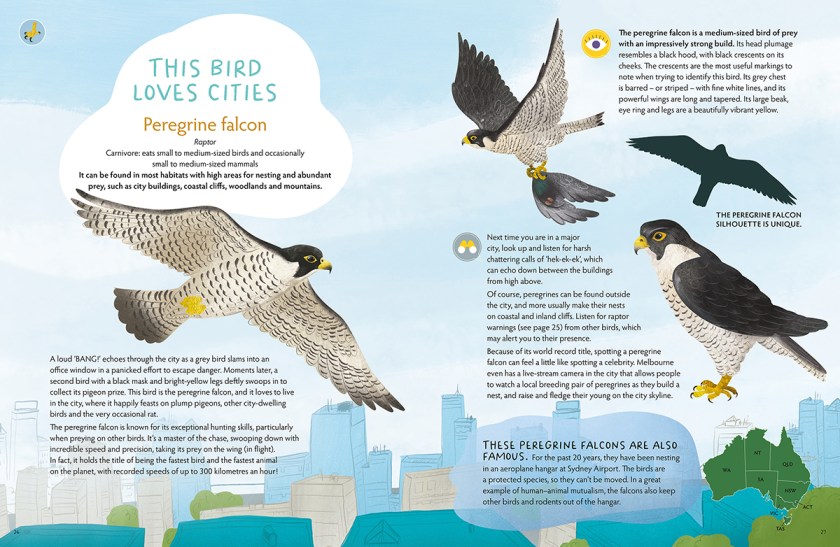
This bird loves cities: Peregrine Falcon (from This Bird, illustrations by Astred Hicks.)
Do you have a tip for someone who doesn’t know much about our urban birds yet but would like to start noticing/birdwatching?
Astred: Begin by looking up, then look down. It may sound funny, but looking up helps you spot birds like the swallow dipping and diving for insects over the football oval. But looking down can reveal larger birds by their droppings. Tawny frogmouths are difficult to see in trees, but you might find them by spotting white droppings at a tree’s base. Listening for birds and learning their calls can always help you discover the variety of species living nearby.
Holly: Start by slowing down and really looking and listening. You don’t need any special equipment. Pick one bird you see often and watch what it does – where it goes, what it eats, whether it’s alone or in a group.
All these birds are going about their daily lives, just like you are. They are finding food, talking to each other, looking after their families. When you start noticing that, it becomes really fun, almost like you’re watching little stories play out.
Even a really common bird like the Australian Magpie can be fascinating if you take the time to watch it closely. The more you notice, the more interesting it becomes.
This Bird: Noticing our urban birds is out now! Ask for it at your favourite bookshop or local library.
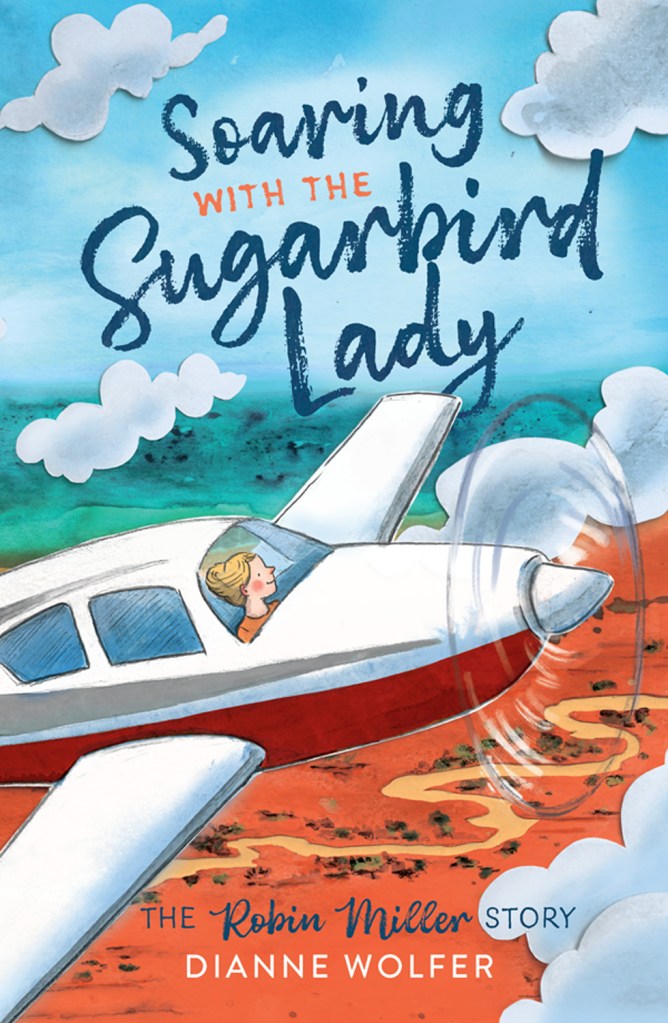
Soaring with the Sugarbird Lady by Dianne Wolfer, Fremantle Press, ISBN 9781760995270
REVIEWED BY ARJAN, 12, NSW
The publisher provided a review copy of this title.
Soaring with the Sugarbird Lady is about the story of Robin Miller. Since birth, Robin’s life was filled with the art of aviation. In her childhood, she would come home to the sight of Catalina aircraft roosting on the River Swan.
In Robin’s time, many people said that aviation was a man’s job and women could not participate and contribute to it. This angered Robin and fuelled her to push to fly even more, until she bought her own plane.
I found the book motivating. If you really want something, even in the face of challenges and you work for it, you can achieve it. I thoroughly enjoyed it. The description and the setting of the scenes really helped me picture Robin zooming over the Kimberly region in her little plane and vaccinating kids with anti-polio medicine dripped on sugar cubes, hence the name ‘sugarbird lady’. Anyone who likes adventure and aviation, this is the book for you.
In summary, I loved this book and the story itself. It’s a great book and I hope you will love it just like I did.