All these entrants’ reviews will be published here at Alphabet Soup over the coming weeks. If you are one of the longlisted or shortlisted reviewers above, we will be in touch soon to let you know the date that your review will appear.
Sharon Giltrow writes humorous picture books and adventure-filled chapter books. She lives in Perth, Western Australia with her husband, two children, a tom cat and a miniature dog.
Sharon’s debut picture book is available in May 2020. Today we’re chatting to Sharon about Bedtime, Daddy!, which is illustrated by Katrin Dreiling.
From the publisher:
Have you ever tried to put Daddy to bed? It can be hard work! Full of heart and humour, Bedtime, Daddy! is for anyone who wants to try putting their grown-up to bed.
You wrote the text for Bedtime, Daddy! and Katrin Dreiling is the illustrator. Do the illustrations match the story you had in your head when you were writing the book?
Katrin Dreiling has done a fantastic job. I was very happy and excited when I saw her first sketches.
EK Books (the publisher) asked her to do sketches of people and bears. When I first wrote Bedtime, Daddy! I pictured the characters as people, so I was very surprised when the publisher suggested bears. However, when Anouska – the editor – explained that bears would make a more universal family, I agreed. The rest of the illustrations match the story perfectly. Placing Daddy Bear in the office for the first page spread was Katrin’s idea. 😊 I only had one illustration note which was for the last page … but I don’t want to spoil the ending.
Favourite pyjamas to wear today vs favourite pyjamas to wear when you were a kid?
My favourite pyjamas as a kid were actually nighties and I used to keep them in a zippered pyjama bag which was a bit like this one. Now as Mummy Bear (aka: Bedtime Mummy!), my favourite pyjamas are my new dinosaur pyjamas. They are also Daddy Bear’s favourite pyjamas and my children have dinosaur pyjamas too.
Did you like to try to delay bedtime when you were a kid?
Most definitely! I was the youngest of eight children so my parents were a little more relaxed about bedtime. So, I used to fall asleep on the couch and my dad would carry me to bed. SShhhh!!! Don’t tell my children.
Can you tell us a bit about the book you’re working on next?
Well, my next book, which I hope will be published soon is called … Get Ready, Mummy! A sequel to Bedtime, Daddy! and you guessed it, it’s about how to get a mummy ready for the day. It starts with the line: ‘When you see your mummy roll over and open her eyes, announce, ‘Get Ready, Mummy!’
Do you have a tip for kids who would like to try writing a picture book themselves?
Be open to ideas. Ideas are all around you. Keep a notebook to write your ideas in. Once you have an idea, brainstorm it and then start writing. Don’t try and get it perfect the first time. Writing is like any skill it just takes practice. You can do it! Also, read lots of books!
As we wave goodbye to April many of you are just finishing your school holiday break, and some have already started Term 2 … (and quite a few of you are learning online). 2020 seems to be a year for doing things differently. But some things are still the same! Our Top Reads* team members are here as usual, for their end-of-the-month book recommendations. We hope you find something on this list to keep your imagination ticking over.
You’ll find a recommended list from our Top Reads Team on the last day of every month (February to November). If you’d like even more recommendations, browse all through all our Top Reads ever!
*All our Top Readers are kids aged 13 and under. No grownups allowed!
There is this thing called the coronavirus
It canceled my art class where we drew on papyrus
It canceled everything including school
I can’t even go swimming in my building’s pool
I can’t see my friends
Or get any books that they usually lend
It’s always in a newspaper or on the news
It really gives me the blues
Elaine Forrestal is a Western Australian author who grew up in Australian country towns and now travels all over the world. Her award-winning books have been published internationally and translated into other languages.
Elaine Forrestal, author of Goldfields Girl
Elaine’s latest book is Goldfields Girl, set during the Gold Rush in Coolgardie, Western Australia.
From the publisher:
It’s 1892. Amid a fevered gold rush, 14-year-old Clara Saunders is in search of adventure in the new outback town of Coolgardie.
A friendship with cheeky young water carter Jack is a promising start, but the goldfields are a harsh place, where water is scarce, disease is common and where many men will never find the fortune they’ve come to seek.
With unforeseen tragedies on the horizon, Clara’s time in the dusty town will truly test the limits of her fierceness and determination.
How did you first hear of Clara Saunders and decide to write a story based on her life? Was Clara a relative?
We were almost at the end of the editing stage of the book before I knew that my sister-in-law’s husband is Clara Saunder’s grandson! So that’s obviously not why I chose to write about her. I was researching ‘children on the goldfields’ because I wanted to write a goldfields story, but felt that so many stories had already been written about it that I needed a new angle. Clara was the only child I found. Because of the harsh conditions —like lack of water and food, only tents to live in, heat, dust and flies — the women and children mostly stayed at home.
How did you go about your research for Goldfields Girl?
I tried Google first. Then I went to the Battye Library (on the 3rd floor of the State Library of WA). I felt like a detective because she wasn’t easy to find. And when I found the transcript of her ‘Memories’ I was so excited I virtually danced around the Library Reading Room. The librarian was a bit shocked.
How long did it take you to write the book?
It took about two years to write the book, then another two years to find the right publisher and go through all the usual editing and rewriting stages.
Did you have to leave anything out of the book?
I have only told the story of Clara’s life from 1892 to 1894, so I have left a lot out. but I didn’t change any of the facts — just added some dialogue to make the story more interesting to read.
How do you come up with the titles for your books?
I am hopeless with titles. I’ve lost count of how many Goldfields Girl had. I usually change them myself a couple of times, then the marketing team doesn’t like the one I have come up with so we work on it together. They know a whole lot more about what works for readers and bookshops, so I’m usually happy to go with what they suggest in the end.
Do you have a tip for young writers who would like to write stories based on real-life events?
You do need to do a lot of careful research when you base your story on real events. But I love doing the research. It’s fascinating to read about how people lived back then. I usually find out a lot more than I need to know, but that’s okay. Maybe I’ll get to use some of it in another book down the track.
Cristy Burne is a science writer and children’s author. You might have read her adventure novels To the Lighthouse and Off the Track. If you love reading nonfiction keep an eye out forZeroes and Ones: The geeks, heroes and hackers who changed history.
Cristy Burne’s brilliant award-winning Takeshita Demons series has recently been re-released as a series of e-books with new covers and a new series title: Hashimoto Monsters. Today we’re chatting with Cristy about the series!
Your Hashimoto Monsters series is quite different in style from your other junior fiction novels. What sort of readers will love this series?
These books are full of supernatural monsters, creepy chills and Japanese culture. They are scary, but they’re also funny and a little bit strange. They’re popular with kids who love fantasy adventure stories. I’d say if you’re aged between eight and twelve and you like the Goosebumps series, you’ll like to read these.
Why Japanese monsters? Did you read a lot of horror/scary books as a child?
I get scared VERY easily and I can’t watch scary movies, but I love action and adventure. And I *love* Japanese monsters. I lived for three years in Japan and studied Japanese monsters for even longer after that.
Japanese monsters aren’t always monstrous. Some are kind, some are sad, some are strange (like the one that sneaks up behind you to invisibly touch the back of your neck), some are insanely happy (like the Laughing Woman who just doesn’t stop laughing and laughing and laughing and laughing … which is a bit creepy, now that I think of it.)
Which is your favourite monster/demon? Why?
I love the aka-na-me, which translates directly to “Filth Licker”. This is the monster you really want for a friend. He’s loves to clean, so you don’t have to. In Japanese mythology, he comes out at night to lick dirty bathrooms till they sparkle … Seriously, could there be any better creature?
In my books, he also cleans laundries, kitchens, dirty faces, you name it. Plus his super-sensitive tongue can taste out clues. He’s like a detective in a frog’s skin.
I also love Betobeto-san, or “Mr Footsteps”. He’s Japan’s answer to that spooky feeling you sometimes get that you’re being followed. Because … drumroll … you ARE being followed. By Betobeto-san. The good news is Betobeto-san is a sort of oversized, invisible marshmallow on legs. He eats the sound of your footsteps (and then spits it out again), but he’s quite shy and not at all dangerous.
Do you have any tips for kids who want to write horror/scary stories?
Scary stories are scariest when you don’t let the reader know what’s coming next. So if there’s a zombie in the next room, don’t give away that information too early. Instead, drop little clues … Slow the action right down. Describe little details, so every creak and every moan, every scent and every sensation invades your reader’s mind. And let your character’s imagination run wild too… What we worry about and imagine might happen is often worse than what actually happens.
And most of all … have fun! Scary stories are so much fun to write because it’s fun to scare ourselves. Ghost story, anyone?
What is your current writing project (or what you might like to tackle next)? Can you tell us a bit about it?
I’m working on an authorised biography of Dr Fiona Wood, who is an incredibly inspiring person. She’s a doctor, a burns surgeon, the inventor of ‘spray-on skin’, and was Australian of the Year in 2005.
It is such an honour to work with Fiona on this book, and to learn about her life when she was a kid. Why did she decide to become a doctor? What was she like at school? What was it like to grow up on the coal mines of England and go on to become a famous Australian hero?
I’m also working on another adventure story for Fremantle Press (and this one’s going to have platypus, flash floods and lots and lots of LEECHES!), plus a fantasy-meets-science series I’m co-authoring with Denis Knight, called Wednesday Weeks.
So I’m super busy, but I try not to get overwhelmed. I just try to do little bits on each project each day.
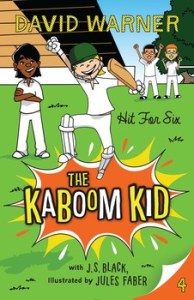
The Kaboom Kid: Hit for Six by David Warner with JS Black, ill. by Jules Faber, Simon & Schuster Australia, ISBN 9781925030846
Mekaeel reviewed his own copy of this book.
Kaboom Kid: Hit for Six is a fiction book. This book is suitable for primary school kids. It is easy to read and understand. The plot is gripping and the story is interesting.
The story is about an 11-year-old child, David Warner, who is in year 6 and loves cricket. He plays for Sandhill Sluggers. A boy named Mo bets that he’ll treat the team if Warner hits six 6s in a match. But when Warner opens the treat box given to him by Mo, he learns a shocking secret.
Because Warner is always dreaming about cricket, he sometimes gets in trouble as well. Mr Mudge (the teacher) also banned him from playing cricket until he brings back his completed essay.
Most of the characters in this book are kind but some like Mo, are a bit rude.
I liked the excitement of finding out if David Warner hits six 6s in one match or not. Would he submit his homework essay on time? Would he get the big win for Sandhill Sluggers?
I really like this book but it could have been better — if David Warner hadn’t been banned from playing cricket.
The Home Imaginarium Writing Competition (Entries close 5 May 2020)
This writing competition is open to Australian residents aged 7 to 12. Write a short story up to 800 words long (shorter is fine). Your story can be on any subject but you must include the words PAPER and BIRD (separately or together) somewhere in your story.
At the end of your story you must include the following details:
Entrant’s full name
Entrant’s age (as at 5 May 2020)
Australian postal address (for receiving books in the mail)
Parent’s email address
Parent’s mobile number
The statement: “This is my own unaided work, and it has not been published elsewhere.”
Parents/guardians should email entries to: editor@alphabetsoup.net.au
ENTRY: FREE
PRIZES: The winner will:
have their story read aloud by an Australian author or illustrator as part of the Paper Bird Books Home Club videos AND
receive a 6-month subscription to Paper Bird Books’ Home Imaginarium. (This means the winner will receive a new-release children’s book each month, for 6 months.)
Alphabet Soup’s Young Book Reviewers’ Competition (Entries close 2 May 2020)
Announcing our book reviewing competition. This comp is open to Australian residents aged 12 or younger.
To enter:Review a children’s book from any genre, fiction or nonfiction. You can choose to review any book you own or borrow, but you cannot enter a review of a book if that book was provided to you or a family member as a review copy.
Junior category (Kindy, Preprimary and Year 1): Winner will receive 6 postcards from various children’s authors and illustrators (one postcard per month for 6 months)
Primary category (Year 2 to Year 6): Winner will receive 6 postcards from various children’s authors and illustrators (one postcard per month for 6 months)
Check out these awesome authors and illustrators who could be sending you a postcard!
 WINNERS
 MEET THE AUTHOR
 Now as Mummy Bear (aka: Bedtime Mummy!), my favourite pyjamas are my new dinosaur pyjamas. They are also Daddy Bear’s favourite pyjamas and my children have dinosaur pyjamas too.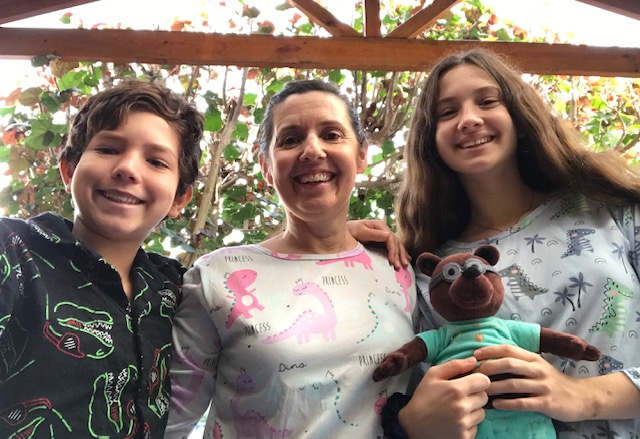


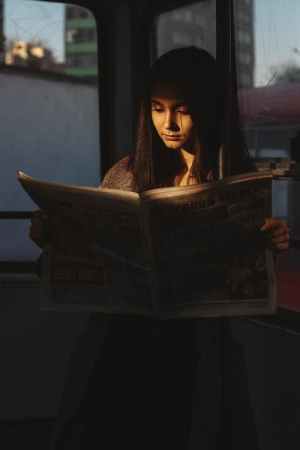 There is this thing called the coronavirus
 It’s 1892. Amid a fevered gold rush, 14-year-old Clara Saunders is in search of adventure in the new outback town of Coolgardie.
 (thanks to Fremantle Press)

 Do you have any tips for kids who want to write horror/scary stories?
 Get Book 1 in the series for FREE! (
 REVIEWED BY MEKAEEL, 7, NSW
 We’re excited to announce our second big competition for 2020!
  Alphabet Soup’s Young Book Reviewers’ Competition
  alphabetsoup.net.au