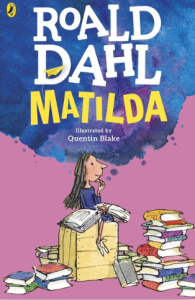
Matilda, by Roald Dahl, ill. by Quentin Blake, Puffin Books, ISBN 9780141365466
Gianna reviewed her own copy of this book.
This book fascinates me. It is about a young girl whose parents think she is a twit. Mr and Mrs Wormwood are rare parents who don’t think about their child. Their child, Matilda, was an extraordinary child. She could easily recite the alphabet when she was only two. Matilda could spell words at the age of three and was able to read novels at the age of four.
Matilda got to know that she could move things with her eyes when she started going to school. Miss Honey, her teacher adores her. But Miss Trunchbull is furious when somebody speaks good about Matilda. Miss Honey and Matilda together face some difficulties.
To know about the happenings please read this famous book by Roald Dahl. This book is one of my favourites because it is an inspirational story that tells children that they should trust their abilities, fight back and face the challenges in their lives.
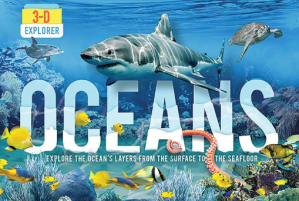
Oceans is a very good book to read because it is filled with facts about the ocean, like we know more about the surface of the moon than the deep ocean.
It’s also full of fun pop-ups! Jen Green uses 3D see-through sections to make an illusion that it’s the surface of the water. She also includes layers upon layers of bits of the ocean habitat.
BUT be careful, please don’t rip or break her hard work! She probably spent a lot of time on it! TOP TIP: To not break it, you must open the book carefully and not quickly stretching the book.
My favourite part of the book is that she provides facts about the animals and plants she put in the scenes. After a fun pop-up, she includes facts about the environment they live in.
That’s why I encourage youth to read my recommended book of February. I’m sure you’d like this AMAZING book. If you like it you should introduce it to your friends!
Welcome to the FIRST Top Reads post for 2020! Every month – from February to November – members of our Top Reads team* recommend their favourite reads for the month. All members of our Top Reads team are kids under 13 and they love to read! Check out February’s recommended reads:
You’ll find a recommended list from our Top Reads Team on the last day of every month (February to November). If you’d like even more recommendations, browse all through all our Top Reads ever!
*All our Top Readers are kids aged 13 and under. No grownups allowed!
We’re thrilled to introduce you to the 2020 Top Reads team.
What is the Top Reads team? Members of this team are keen readers who stop by each month to recommend a favourite read for the month, and they’re all kids like you!
INTRODUCING:
Henry, 6, WA Henry is six years old. He lives in the Great Southern with his two sisters. He loves to read humorous books and ones which are about Pokémon. He loves to play soccer and have Bey Blade battles with his friends, and when he is allowed, he also likes Dragon City which is a computer game. His favourite subject is Maths, food is strawberry ice cream and his favourite BeyBlade is Valtryek.
Kobe, 9, WA
Kobe is a talented girl who loves art and writing. Her favourite books are Snoopy books.
Willow, 8, NT
Willow is a non stop action packed Territory kid who loves to play hard. When she is not running around, swimming, dancing, singing and drawing, she loves to read. Her favourite books are ones full action! She also loves books that make her laugh.
Lewis, 11, WA
Lewis loves reading, particularly entertaining/funny books and adventure stories. When he isn’t reading he loves music, Star Wars, Harry Potter, Lego, scooting, fishing, kayaking, and playing with his younger brother.
Matilda, 11.5, NT
Matilda loves fiction, fantasy & mystery books. Her favourite book series are Harry Potter, The Ink Series, and The School for Good & Evil. She enjoys all school subjects as well as netball, swimming & dance. She also loves art & being creative.
Céití, 10, WA
Céití loves spending time with her chocolate labrador Flynn. She enjoys all sorts of reading and writing, playing her violin, cooking and playing water polo. Her favourite book for 2019 was Beverly, Right Here by Kate DiCamillo.
Anishka, 9, QLD
Anishka loves writing poems and reading books. She started composing her own poems when she was 4 years old. She is involved in raising funds for Heart Research and Foundation through ‘Jump Rope for Heart’. She is also involved in a meditation group in the community.
Fergus, 10, WA
Fergus loves to play Lego with his brother, ride his bike, game, code, play with his dog and read. His favourite genres are action, adventure and magic. He has three favourite series: Ranger’s Apprentice, Brotherband and Harry Potter.
Albie May, 8, NSW
Albie May loves comics including Asterix and Amulet. She also loves old leather-bound books with mouldy pages (that she barely ever reads). She loves reading funny jokes out loud from Untangling Spaghetti by Steven Herrick.
Rory, 8, WA
Rory loves to spend his day playing Lego, reading, coding and riding his scooter. His favourite authors are JK Rowling, Sally Rippin, Andy Griffiths and Jack Heath. His best place to read is in his bunk bed. When he grows up, he wants to be an archaeologist.
—
The Top Reads Team will share reading recommendations from February through until November.
Gabrielle Wang writes and illustrates picture books and novels. Her award-winning novel A Ghost in My Suitcase was adapted as a play. Gabrielle’s latest novel is the sequel —Ting Ting the Ghosthunter. From the publisher:
Thirteen-year-old Ting Ting has learned the ancient skills and art of ghost hunting from her adopted grandmother, Por Por, a famous ghost hunter. But Ting Ting is sick of capturing harmless ‘fat belly’ ghosts, and when a desperate plea for help comes for Por Por, Ting Ting decides to take matters into her own hands and prove that she is a true ghost hunter. But what Ting Ting discovers is much more dangerous than she had thought. Can Ting Ting conquer her own pride to save Por Por and the villagers before it’s too late?
Ting Ting the Ghosthunter is the sequel to A Ghost in my Suitcase. Do you find anything different about writing a sequel than a standalone story?
I found it much easier and quicker to write the sequel as I already knew my characters and the world they inhabited. However Ting Ting the Ghosthunter did differ from most traditional sequels because I used a different protagonist. Instead of following the adventures of Celeste, the main character from A Ghost in My Suitcase, I used Ting Ting who was the antagonist in that first novel.
A Ghost in my Suitcase has been adapted for the stage and performed around Australia. Did seeing those performances influence how you wrote the character of Ting Ting in the sequel?
I wrote Ting Ting the Ghosthunter before I saw the play. But the inspiration to write this sequel did come out of the very first meeting I had with Barking Gecko, the Western Australian theatre company who adapted the novel for the stage. It was during these two days of creative development with the creative directors, the playwright and the set designer that I realised how strong a character Ting Ting was. She had a lot of issues to work through which is, as you probably know, perfect for any main character.
There’s a strong sense of place in these two books. Do you visit a place before you set a book there?
Setting is the first thing I consider when I begin a novel. I’m a highly visual person so as I write, I imagine the landscape my characters are living in. In fact for me, setting is a major character in all of my books. A place can be dark and brooding, angry, joyful or sad. It can be a perfect vehicle to reflect your character’s mood. One of my favourite series as a child was My Friend Flicka, The Green Grass of Wyoming and Thunderhead written by Mary O’Hara. I loved reading books about horses. The setting in these novels was so strong to me, evoking in my young mind wide-open grasslands and endless summer days. The Silver Brumby has that same sense of place evoking the Australian mountains.
Now that you have me thinking on the subject of setting, listed below is where my novels take place.
The Garden of Empress Cassia in a suburban city. I had Melbourne in the forefront of my mind with this one. Even though I don’t name the city, trams rattle up and down the streets.
The Pearl of Tiger Bay in a seaside town. I pictured the coastal towns along the Great Ocean Road while I wrote it.
The Hidden Monastery in the rainforests of Queensland.
The Lion Drummer in Little Bourke Street Chinatown.
A Ghost in My Suitcase in Shanghai and in a watertown like Wuzhen, China.
The Poppy Stories in Wahgunyah, Beechworth and surrounding areas.
The Pearlie Stories in Darwin, Adelaide and Perth.
The Wishbird in the far northwest China.
The Beast of Hushing Wood in the woods of North America.
Ting Ting the Ghosthunter in Shanghai, and the countryside.
I need to visit these places so that I can get a sense of them. When I wrote the first draft of The Beast of Hushing Wood, my publisher Jane Godwin said that she didn’t get a true sense of the woods. That was because I had never been to the woods in North America. I knew then that I had to go. I needed to walk them, to listen and smell and look. I had to let them show me what to write.
Pen and paper? Or straight onto the computer?
I do a combination of both. Each novel dictates to me how it wants to be written.
Can you tell us something about your next project?
My current work in progress has the working title of The Story Magician. It is set in Melbourne during the 1950s and is about a 12-year-old girl called Sparrow and a dog called Jupiter. This will be part graphic novel, part fairytale, part first person narrative.
In writing and illustrating The Story Magician, I want to explore this post-war era of Australian history. It was an important time for Australia when people were finally looking towards a brighter future. All wars leave scars. What are the legacies of war? Is everything war leaves behind bad? What is the power of stories to help heal wounds? I also want to explore the different types of love — the love between parent and child, child and grandparent, between a dog and its human, between siblings, between best friends. And the unfulfilled love of a birth mother to her child.
I was lucky enough to receive an Australia Council Literature Grant to write The Story Magician. I have a long way to go and need to do a lot of experimenting, as this novel is more challenging than any of my other books. Still, I am enjoying the challenge. That’s what writing (and illustrating) is all about — breaking through our own self imposed boundaries and stretching our creativity.
Geronimo Stilton Classic Tales: The Secret Garden by Geronimo Stilton, Scholastic Inc,
ISBN 9780545872607
Gianna reviewed her own copy of this book.
This is a book full of mysteries: a girl whose parents had died. A mansion named Misselthwaite Manor. There are a hundred rooms in this mansion which are said to be locked. There are many gardens too. All of them are unlocked but one, which was the mistress’s favourite garden. But she had fallen from a branch while sitting, which had caused her death.
The girl makes a friend with whom she plays everyday in the many gardens. But soon, every night she hears a faint crying noise. The author very mysteriously finds the noise, where it comes from. Is it a ghost? A murderer who is crying every night so that someone comes, and he kills them? Or a boy? Read this mysterious book to find out.
This beautiful book by Geronimo Stilton consists of friendship, bravery and most of all trust and suspects.
This is Gianna’s first book review for Alphabet Soup. If YOU would like to send us a book review, check out our submission guidelines.Happy reading!
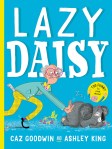
Caz Goodwin lives in Victoria and writes picture books, junior fiction, short stories and poetry for children. Her latest picture book —Lazy Daisy— is a hilarious rhyming tale, illustrated by Ashley King.
From the publisher: All of Jasper’s dreams come true when he finds his very own ‘puppy dog’ to walk in Centenary Park. But Daisy the ‘dog’ isn’t much of a walker — she tends to spend most of her day climbing gumtrees and dozing. If only someone would explain to Jasper that Daisy is a koala, NOT a dog! Just as Jasper’s about to give up on his dream, he has a madcap idea of how Daisy can still join him on his daily walk, whether she’s asleep or not.
We’re thrilled to welcome Caz Goodwin to Alphabet Soup today!
Do you write on a computer, or use pen and paper?
When I’m writing a first draft, I use old-fashioned pencil and paper. I often use an exercise book, and only write on one side and use the opposite page for notes and ideas. I like to cross out and edit as I go, and make a lovely, scribbly mess. Later, I type it onto my computer.
You write picture books, novels, short stories and poems … how do you know which one to start writing if you get an idea?
My writing ideas usually start with a character. I toss the character around in my head for a while before I start writing, to work out what adventures they might have or what trouble they might get into. (I like to put my characters in lots of strife.) Once I have an idea of what the story will be, I can work out whether it would be best as a picture book or novel or short story.
What’s next for Daisy?
Daisy the koala causes a hullabaloo in the next book, called Daisy Runs Wild. While on her daily walk, she unexpectedly leaps into the air and takes off round the park. Jasper runs after her as she interrupts a yoga class, ruins a game of cricket and accidentally pushes poor posh Mrs Pallot into the pond! Can Jasper work out what is wrong with Daisy?
(Daisy Runs Wild, published by Little Hare/Hardie Grant Egmont, will be released in March.)
Which of your characters is most like you?
If I’m honest, I’m quite a bit like Daisy the koala. Two of my favourite things are eating and sleeping, and despite my best intentions, I often end up in trouble.
Do you have a tip for young writers?
Can I give you two tips? Read a lot. Write a lot. (Like anything, your writing will improve the more you practice. And don’t forget to edit your work.)
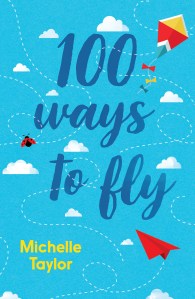
100 Ways to Fly by Michelle Taylor,
UQP,
ISBN 978 0 7022 6250 0
Kobe received a copy of this book from the publisher.
Did you know that Michelle Taylor was the first person to ever make you fly? It’s the book I’m reviewing and when I read it I flew high in the sky!
100 Ways to Fly is a great book that’s full of interesting poems that make your heart soar (fly) over the clouds like a plane … no wonder it’s called 100 Ways to Fly!
Every time I read one of the book’s poems I seem to smile, so I’ll always try to read one or two poems before I go to sleep. I bet you’ll do exactly the same thing when you read this fabulous book. Try reading 100 Ways to Fly and you’ll be amazed when you find out you’ve been lifted off the ground by this book of wonder.
Michael Speechley has been a graphic designer and high school art teacher in WA.
His first picture book, The All New Must Have Orange 430, explores themes of consumerism and the environment. It was shortlisted for Book of the Year, CBCA awards, 2019. His second picture book, The Gift, deals with kindness and the joy of giving.
The house across the road looks abandoned, but Rosie knows someone lives there. She decides to give her mystery neighbour a gift – something different, something unusual, something surprising. Something her mum would have been proud of.
We’re thrilled to welcome Michael Speechley to Alphabet Soup today.
What are your favourite illustrating tools?
I’m pretty basic here. My first book, The All New Must Have Orange 430 was just a bunch of sketches from my A4 sketchpad that I photocopied onto brown paper, then splashed on a bit of white gouache for some highlights.
My second book, The Gift, was drawn with an ordinary black pen, but I used a special paper called drafting film (it looks like thick tracing paper). This paper allowed me to scratch and scrape into the black pen lines, making the drawings look a bit vintage and old. It was fun, and I could scratch away my mistakes. I could also draw my images on paper first, fix up any mistakes, then literally trace over them because the drafting paper is see through. Good trick hey! Then I scanned in my images and added colour in Photoshop.
Your illustrations are very detailed – how long does it take you to create one double page spread?
They are very detailed, but I kind of cheat! Not in a bad way though. Sometimes it is easier for me to create lots of individual drawings, then put them all together in Photoshop. The trick with Photoshop is that I don’t want to make it look like I’ve used it, but if you use it well, it can make a single, very complicated looking image, but one that is actually made up of lots of little individual drawings. The big garden image in The Gift probably has more than a hundred little drawings in its construction, and some images in The All New Must Have Orange 430 might be made up of about 50 drawings. I could draw them as one image if I wanted to, but I don’t need to and it’s actually better not to in some ways. Even using Photoshop at the end, the whole process of drawing and putting them together on the computer can take a couple of months.
Writing text: Pen and paper? Or typing straight into the computer?
I scribble anything down onto anything I can find; it could be a scrap of paper, a napkin, a post-it note, but usually into my current A4 sketchpad. I have about 12 of them now, and all of my terrible early sketches and story ideas are in them. When I feel as if the story is basically laid out and will fit roughly inside the 32-page limit, I start sketching and drawing my page compositions. These are super rough, but they give me an idea about how much text I have to play with and the type of image that would suit. It’s the hardest bit, but I like this challenge; to-ing and fro-ing between words and images. Sometimes I can remove words because the image says it all anyway, and sometimes I can add words to make things clearer. It’s a juggling act, it can be very difficult, but it’s so much fun, especially when you solve these puzzles.
Which comes first – illustration or text?
I always start with text. The story is so important. I’m a real observer, it’s an artist thing I guess. While I’m drawing in cafes, I sometimes listen to conversations about what people believe to be important. I don’t mean to be a sticky-beak, but you can’t help it when you are drawing. Sometimes they talk about getting new houses, renovating kitchens, higher paid jobs, fancy holidays, expensive cars and big watches. Then again, a lot of people talk about doing nice things for others, sharing some of the problems that they may be experiencing, discussing their hopes and dreams; real human things that matter. Some people want to stand out, some don’t. Personally, I think that some people can be a bit caught up with life’s trappings, but most people are really nice, and so many people come up to me and say lovely things about my drawings, ideas and books. So these all give me ideas about people and how they think.
When I write a book, I like to think that I’m not judging people with different viewpoints to the ones that I have, but I hope I can either offer an alternative way of looking at the world, or confirm their own feelings about the things that they find important and observe around them as well.
What are you working on next?
I always try and have a few ideas brewing. I have been spending some time working on an old idea lately. I have really tried to get it working, but it actually needs a full makeover, so I’ll put it away for a couple of years and let it simmer in my head. I have some new ideas and directions for it though.
So instead of spending time on that picture book, I’m developing some ideas for another picture book about a boy called Mike (not me though, it just rhymes with bike), and it’s about a boy who doesn’t have a bike. Very sad, hey? Everyone should have a bike! I also have ideas about a Bigfoot, a greedy princess, an average person, and many, many more.
 REVIEWED BY GIANNA, 10, VIC



 AWESOME EXTRAS:
 REVIEWED BY GIANNA, 10, VIC
 Do you write on a computer, or use pen and paper?

 MEET THE AUTHOR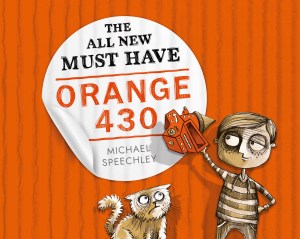


 alphabetsoup.net.au