Posted in authors, illustrator, interviews

Meet the author: Gus Gordon

MEET THE AUTHOR

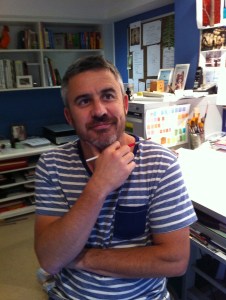
Gus GordonGus Gordon grew up on a farm in northern NSW Australia and, after leaving school, worked on cattle stations all over the country before deciding to pursue a drawing career. He has since illustrated and/or written nearly 80 books for children. His writing is always anthropomorphic (animals take the place of humans in his stories). Gus lives in NSW with his wife and three children. His latest book is Finding François.

From the publisher:

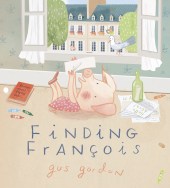
Alice wishes she had someone her own size to talk to. Then one day her wish comes true.
Through hope and chance, love and loss, two little ones who need each other find each other.
A heartwarming story from award-winning author and illustrator Gus Gordon about loneliness, saying goodbye and the value of life-affirming friendships.
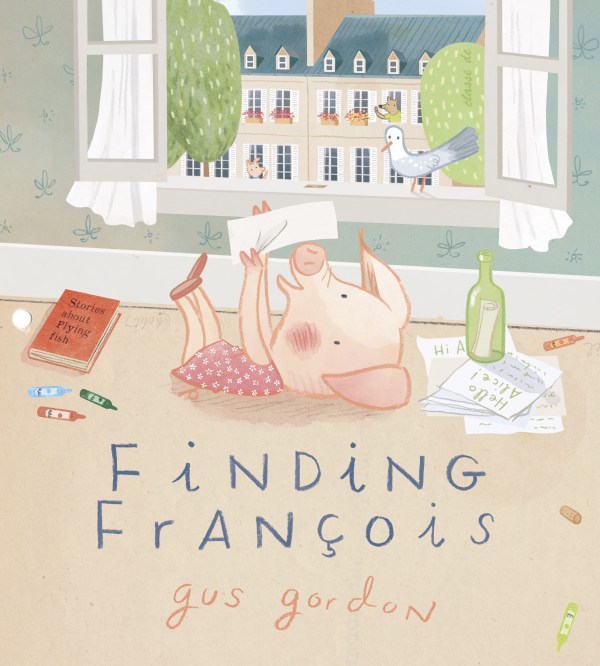
Finding François by Gus Gordon


Alice Bonnet (the main character in Finding François) lives in Paris. Are the places where Alice lives and visits based on places you’ve visited in France yourself?
Yes. It’s no secret that I love France, particularly Paris. It is an incredibly inspiring city. I have spent a great deal of time there, wandering the streets aimlessly. Much of the story is based around the river that flows through Paris; the Seine river. In the background of many of the illustrations, you can see the historical buildings that sit beside the river, including the Institut de France and the Musée D’Orsay. The bridge Alice throws the bottle from is the famous Pont Des Arts pedestrian bridge.

Alice and her grandmother live up the hill in the 18th arrondissement village of Montmartre. It is where I always stay when I’m in Paris. It is well known for its artists community and many famous artists have lived and painted there.

The illustrations include snippets that look like they’re cut from the pages of French catalogues, magazines or books. Do you cut up real pages, or do you find these images online?
Most of the images I use are from actual old French Catalogues. Sometimes I source material online if I can’t find what I’m looking for in my collection. Very rarely do I actually cut or tear the pages out of the catalogues. They are far too old and precious (many are well over 100 years old). I also used old postcards, receipts, stamps, letters, labels and advertisements. I scan the image I need into my computer, essentially ‘cutting’ out the image (or paper) and ‘pasting’ it into the artwork. This is all done digitally. Aside from this, every element of each illustration is hand-drawn, painted and collected, then scanned-in, bit by bit, into my computer. I assemble the whole thing, like a glorious puzzle, on the screen. This is good and bad (but mostly good). It allows me to move things around and change my papers and tweak my colours if I need to. Unfortunately I’m not left with any originals so I do prints instead. Everything takes an awful long time but it seems to work out in the end so I’m happy.

Alice likes to write lists of what she plans to do each day. Are you a writer of lists? What’s on your list of plans for today?
Like Alice, I love writing lists. I have to really as I forget things otherwise. Today I am filling out questionnaires like this one, emailing my publisher and others, collecting a framed print and hopefully I’ll have time to do some writing later today.

Have you ever sent (or found) a message in a bottle yourself?
No, I haven’t but I’d love to find a message in a bottle on the beach one day.

Do you have a tip for young artists/illustrators?
My tip for young artists would simply be to keep doing what you’re doing. Do what feels right to YOU and no one else, no matter how unique or peculiar your art is. Stick at it and good things will come your way in time.

Can you tell us a bit about your next writing project?
My next book is about an anxious robot named, Gerald.


AWESOME EXTRAS:
Finding François by Gus Gordon

See Gus Gordon working in his studio (YouTube – Paper Bird Home club video)

Click here for Teachers’ Notes for Finding François

Visit Gus Gordon’s website for more about him & his books
Posted in Book reviews by kids, Book reviews by Kobe

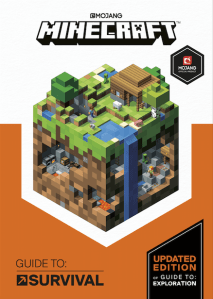
Book review: Minecraft Guide to Survival

MINECRAFT GUIDE TO SURVIVAL by MojangREVIEWED BY KOBE, 9, WA

Minecraft Guide to: Survival by Mojang AB, Egmont UK, ISBN 9781405296502

Kobe reviewed her own copy of this book.

ARGH! You just can’t find the right book to guide you through Survival Mode in Minecraft, what should you do? Well, I’ve got the perfect solution for you: read the amazing, fantastic, and spectacular Minecraft Guide to: Survival book! This official book is developed by Mojang, the creators of Minecraft and it is absolutely the unmistakable guide to Survival Mode in Minecraft with every piece of info and tips!

I believe that this book is totally and utterly the most ultimate Survival guide you can wish for! There, solved your problem, but here comes another, how do you use the book? Using the book is quite easy because all you need to do is read the book through and if you come across ANY problems, really look and seek some information to help yourself to any situations you have! How simple is that?

Now imagine you’re playing just fine, hold on! What’s that thing right next to you? Hmm, looks like some sort of creature that swims in water, EEK! It also has some creepy teeth and weird eyes! That’s exactly what happened to me! I was doing amazingly well looking at the stream I was next to behind my tree, then weird tentacles rose out of the water and with circle of teeth! But how could I know that it was only a squid rather than a nerve racking monster without this amazing guide book? If I had that book at that time, I wouldn’t be so creeped out!

Now you can immediately see how your brain is urging you to get that book! I’m just saying, you are not going to survive in Survival Mode for that long if you’re a beginner and you haven’t gotten this book already because when I tried Survival without the book, it was only a matter of time before a creeper exploded right next to me, so I died.

Now I am 100% sure you are going to get this book as soon as possible! Have a good time reading, adventurous reader!


Kobe is a regular book reviewer for Alphabet Soup. You can read all her reviews hereTo send us YOUR book review, check out our submission guidelines. Happy reading!

Posted in Book reviews by Fergus, Book reviews by kids

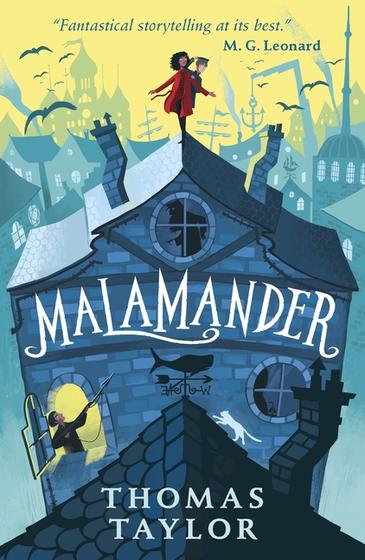
Book review: Malamander

Malamander by Thomas TaylorREVIEWED BY FERGUS, 10, WA

Malamander by Thomas Taylor, Walker Books, ISBN 9781406386288

The publisher provided a review copy of this book.

Malamander is the first book in The Legends of Eerie-On-Sea series by Thomas Taylor. It’s about a boy called Herbert Lemon who is the Lost-And-Founder at the Grand Nautilus Hotel. Everything is fine until a strange man comes to the hotel looking for a girl. Herbert hides the girl. He decides to keep her a secret because the man does not feel quite right. Herbert and the girl are then whisked into an adventure filled with monsters, misty nights and moaning noises. They must unearth what really happened to the girl’s parents and uncover the watery secrets of the malamander.

Malamander is a great fast-paced mystery book with many twists and turns. It has good ideas and lots of interesting characters, like the boathook man who is dark and foreboding. The ending is very exciting and the build up of tension is great. The ending hits you with a bang and leaves you stunned and amazed.

I think that if I lived by the beach I would never go out on a misty night again after reading this book. I would rate this book 10/10 and recommend it to anyone aged 8 onwards.


This is Fergus’s first book review for Alphabet Soup. If YOU would like to send us a book review, check out our submission guidelines. Happy reading!

Posted in authors, interviews

Meet the author: Tristan Bancks

Tristan Bancks (photo Amber Melody)MEET THE AUTHOR

Tristan Bancks tells stories for the page and screen. His books for kids and teens include Two WolvesThe Fall and the Tom Weekly series. Tristan is currently working with producers to develop several of his books for the screen. His latest book is Nit Boy, which is illustrated by Heath McKenzie. 

From the publisher:

Meet Lewis Snow. He has the worst case of nits in world history. Everyone wants him to shave his head. But Lewis thinks of his nits as pets. He’s determined to keep his hair and his nits, whatever it takes.

Ned lives on Lewis’s head. He’s the first-ever jumping nit. His dad wants Ned to help nits take over the world. But Ned likes it on Lewis’s head. Ned’s vegan and hates the taste of human blood.

And you thought you had problems.


Nit Boy by Tristan Bancks and illustrated by Heath McKenzieOkay … how much scratching did you do while you were writing Nit Boy?
I scratched my head till it was raw. It’s so weird how reading or writing about itchy things makes humans need to scratch. I love reading Nit Boy chapters to kids at events just to see the ocean of scratchers in the audience.

Nit Boy is fiction and features headlice and fleas as characters, plus some quick quizzes for readers. How did you go about your nit/flea research?
I watched disgusting YouTube videos of nits feeding on kids’ scalps and presenters like Michael Mosely giving themselves head lice on purpose for the sake of science. I considered doing this but I had young kids at home, so I didn’t need to try to get nits. I had them anyway. I also read everything I could and I tried to remember what it was like having nits as a kid and having my deputy principal pick through my hair with a razor-sharp lead pencil.

Jumping competition! Who wins: Ned the-first-jumping-nit or Sahaj the flea?
Sahaj is an elderly flea and his knees aren’t what they used to be, so he mainly walks these days. Ned has been genetically engineered to be the world’s first-ever jumping nit, so I’d say Ned definitely wins the jump-off!

Do you have a writing tip for young writers?
It’s more of a challenge than a tip. Try writing a story from the point-of-view of a non-human character. So, a nit or a flea or a cicada or a dog or a guinea pig or a lion. It’s fun and takes lots of imagination to put yourself inside the perspective of another creature. It’s a good one for the Book Week theme of ‘Curious Creatures, Wild Minds’, too!

Can you tell us a bit about your next writing project? 
My great great uncle, Jimmy Bancks, created a comic strip called Ginger Meggs in 1921. It’s now Australia’s longest-running comic strip, in newspapers all over the country, every day. I’m writing a 100th anniversary book of short stories for release in 2021! It’s a project I’ve dreamed of for many years and I love telling stories with the characters. My Tom Weekly books and Nit Boy have been great training for tackling Ginger Meggs. I’d love to write another Nit Boy book, too.

Nit Boy is available from bookstores and libraries now!


AWESOME EXTRAS:

Watch the book trailer:

How to draw Ned the Nit (YouTube video)

Read Chapter 1 of Nit Boy

Click here for Teachers Notes 

Visit Tristan Bancks’s website for more about him and his books!

Posted in Book reviews by kids

Book review: Goldfields Girl

Goldfields Girl by Elaine Forrestal (book cover)REVIEWED BY CÉITÍ, 11, WA

Goldfields Girl by Elaine Forrestal, Fremantle Press, ISBN 9781925816495

The publisher provided a review copy of this book. 

When I first moved to Australia, I lived on a street called Coolgardie Avenue. This was my first introduction to the name Coolgardie, which I learnt was a name of an early goldmining town in Western Australia. This book teaches us about Clara Saunders’ experience in the mining town of Coolgardie. Based on the true story of her life, the book tells us of the history and the happenings in the 1890s in the goldrush era.

Clara and her family come from Queensland to Perth to start a new life in WA’s goldfields to strike it rich and find gold. Clara gets offered a job in a local bar in Coolgardie. She accepts as she is always open to a new adventure and soon realises what the life-style of Coolgardie is like. She learns that water is scarce, living conditions are poor, so diseases spread easily, and it is a new town so there are not many people living there. Her friend Jack, who she meets in Southern Cross, delivers water to Coolgardie regularly. Clara does not have much female company except for Mrs Fagan, who is her boss in the pub, and later on  Florrie from England, who comes to work in the pub with Clara. Clara enjoys living there but finds it tough at times.

Goldfields Girl gives an insight into the early goldrush days in Coolgardie. Clara sees many cases of typhoid, dehydration and other illnesses. She becomes a nurse of sorts and is called out to give medical assistance in many cases. Before she leaves Southern Cross her mother gives Clara her special book, Encyclopaedia of Common Diseases and Remedies. She uses this book to help treat her patients as there are no other doctors or nurses around the area. Clara meets Moondyne Joe, a well-known West Australian bushranger, in Southern Cross and again in Coolgardie. Clara listens to Moondyne Joe telling stories of his famous escapes and adventures.

This book would be a great read for 9-14 year olds interested in historical fiction. What stood out for me was that Clara was only fourteen when she left her family and went to Coolgardie all alone. In today’s world that would never happen. I think Clara Saunders was very brave and courageous.

Read a sample chapter on the publisher’s website.


This is Céití’s second book review for Alphabet Soup. Read her earlier review. If YOU would like to send us a book review, check out our submission guidelines. Happy reading!

Posted in Uncategorized

Young writers in action: Pancake

PANCAKE
by Elizabeth, 7, NSW

Gold house photo courtesy of pixabay.comBeth and Pancake are best friends in the world.

They live in a gold cubbyhouse. Pancake is an excellent and smart dog. She is a beautiful black dog. Beth is a loving, gentle and kind girl.

One day, Pancake was watering the yard and suddenly, there was a bang! The door slammed.

Beth said, “I am sorry for slamming the door. It is locked!”

Pancake said, “Do not worry. I can fix it.”

Pancake tried to open the front door but it did not work. Pancake tried to open the back door but it did not work.

Pancake climbed up to the big window and went into the cubbyhouse and got the key. Then she let her friend back in the house.

Beth said, “Thank you.” She gave her best friend a hug.


Elizabeth is a regular contributor to Alphabet Soup. You can read more of her work here. To send us YOUR story, poem, artwork or book review, check out our submission guidelines. Happy reading!

Posted in authors, interviews

Meet the author: Michelle Kadarusman

MEET THE AUTHOR

Michelle Kadarusman. Photo by Micah Ricardo RiedlMichelle Kadarusman writes novels for children and teenagers. Michelle grew up in Melbourne, Australia, and has also lived in Indonesia and in Canada. Her books have been translated into Spanish and Turkish. Today we’re chatting to Michelle about her own voices novel The Theory of Hummingbirds. Like Alba (the main character), Michelle was born with the condition talipes equinovarus (commonly known as club foot) and underwent operations when she was still young.
From the publisher:

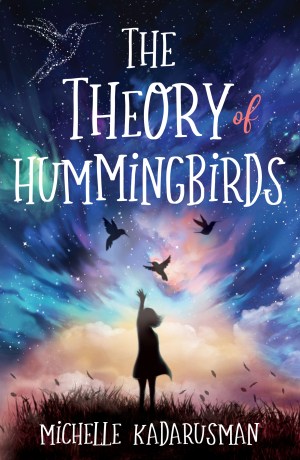
Alba has been best friends with Levi since forever. They’re both obsessed with hummingbirds and spend their lunchtimes hiding out in the school library. Alba normally doesn’t mind that Levi’s got a science theory on just about everything. But when he becomes convinced the school librarian has discovered a wormhole in her office, Alba thinks maybe he’s gone too far.

Then there’s Cleo. That’s what Alba calls her left foot, which was twisted in the wrong direction at birth and has been strapped in a brace for most of Alba’s life. With the final cast about to come off, Alba is set on running in her first cross-country race. But what if Levi doesn’t believe she can do it?

The Theory of Hummingbirds by Michelle Kadarusman


How long did it take you to write The Theory of Hummingbirds, from first draft to final draft?
The Theory of Hummingbirds took two years from first draft to finished book. When I initially submitted the first draft to the publisher it was a little short so I had to add more chapters to plump it up. Then I worked with the editor on revisions for many months before we felt completely happy to send it off to press.

Did you already know a lot about hummingbirds before you wrote the book?
The first hummingbird I ever saw was at a friend’s lake house in Canada. I grew up in Australia where we don’t have hummingbirds, so when I saw my first hummingbird, I was very excited. They are so tiny and dart around like fairies. I was mesmerized and knew that I wanted to include them in a story. I read all about them for research before writing the book.

Alba and Levi are both committed and persistent in working towards their goals/theories. Were they inspired by anyone you know in real life?
Like most fictional characters, both Alba and Levi have traits of real people I know, but mostly they are from my imagination.

Can you tell us a little about your next writing project? 
My current work-in-progress is a middle-grade novel set in my father’s homeland of Indonesia. It centres around a captive orangutan and two middle schoolers. One is a budding animal and environmental activist the other is the orangutan’s keeper. It will delve into palm oil deforestation, the black-market exotic pet trade, identity and belonging.

Do you have a writing tip for young writers?
 I have three tips! The first is: read a lot. Read, read, read. Reading is what all writers do to learn and become inspired.

The second tip:  let yourself be bad at first. Don’t expect to be able to write like your favourite authors right away. It will take time to develop your craft. Keep working at it and let yourself make mistakes.

My third tip: listen to feedback from people you trust, the feedback will always help you become a better writer.

The Theory of Hummingbirds is out now, and available from bookshops, libraries, and the publisher!


The Theory of Hummingbirds by Michelle KadarusmanAWESOME EXTRAS

Find out more about Michelle Kadarusman and her book on the publisher’s website

Check out photos of hummingbirds on the National Geographic site.

Posted in info

TOP READS: June 2020

It’s the last day of the month and that means it’s time for some bookish recommendations from the kids on Alphabet Soup’s Top Reads team.* Check the shelves at your school library, local library or bookshop for these page turners.

You’ll find a recommended list from our Top Reads Team on the last day of every month (February to November). If you’d like even more recommendations, browse all through all our Top Reads ever!

*All our Top Readers are kids aged 13 and under. No grownups allowed!

Posted in Book reviews by Albie, Book reviews by kids

Book review: Claire Malone Changes the World

Claire Malone Changes the World by Nadia L King and illustrated by Alisa KnatkoREVIEWED BY ALBIE, 8, NSW

Claire Malone Changes the World by Nadia L King, illustrated by Alisa Knatko, Dixi Books, ISBN 9786197458794

Albie received a review copy of this book from the author.

The video below is approximately two minutes long. A text version of this book review is also provided if you scroll to the end of this post.


Video: Albie, 8, reviews Claire Malone Changes the World


Text version:

Hi, my name is Albie and today I’m going to do a book review on Claire Malone Changes the World by Nadia L King and Alisa Knatko.

Claire Malone is around 13 years old and never goes outside. At the start of the book she is grumpy, sad, bored and lonely. And at the end of the book she is happy, fun and cool. My favourite character in the book is Marmalade, ‘cos she’s a very cute cat.

Claire wrote letters and changed. She wrote letters to the Prime Minister, the weather department and the Education Department. She finally wrote a letter to the Prime Minister and asked for a new park. The town all celebrated to get their new park! Yay!

I learnt to stand up for myself and do what comes naturally. This book gave me courage. That is why I love it. My favourite page in this book is here [holds up book] where the school teacher says … ‘At school, Claire’s teacher asked her class to draw what scared them most.’ This is little Claire there [points to illustration] and she is scared of bananas and no wifi. And everyone else is scared of stuff like fires, bees, snakes, spiders, ghosts! And she’s just scared of … a little old … no wifi! and bananas.

I thought it was really good because it’s really funny. I really do hope you read this book and love it as much as I do. Bye!


Albie is a regular book reviewer for Alphabet Soup. Read a previous review here. To send us YOUR story, poem, artwork or book review, check out our submission guidelines.

Posted in info

Young Writers in Action: The Prisoner in the Cage

THE PRISONER IN THE CAGE
by Ever, 10, Bellevue, Washington, USA

White Pigeon in a cage. Photo by Garfield Besa on Pexels.comI gazed mournfully through the old rusty glass, scarred and dented with bruises of dirt and yellowed grass. It was snowing lightly outside, tiny specks of snowflakes, pure and clean, gently drifting down, making the journey of a snowflake’s life.

The chilly winter air was quite cold, and through the broken window, breezes sailed across the tattered room, piercing my delicate small body. I was a handsome young bird, with wings fresh and strong, and here I was, imprisoned, cut off from my world in the skies. How I wished to be free, to be soaring in the clouds with the ones of my kind.

The snowing went on for days and days, frosty winds that kept me weak whipped me, biting me with their sharp teeth and their venom of cold filled me. The wide world that I used to have with a flap of a wing now became the cage that I was set in, microscopic compared to my old world in the air, the world where I could explore every crook and nanny, that world that gave me freedom. But now here I was, powerless against the dull metal binds of the once-golden cage. The strips of my prison held me back, and each time I looked at them my heart was filled with that sense of lostness, that feeling of being forgotten and wiped from their minds.

It was a sad feeling, knowing you were known no more, knowing that you weren’t thought of anymore. I felt extinct, and the hope that was never there in my heart was blown out with the gale that came every now and then.

I was a prisoner. To think an animal that had the gift of freedom, the power of flying anywhere in the world, was trapped by thin steel cords; well, that was a thought that had never entered my mind before.

I was the lonely prisoner in the cage, in a musty and creaky room, uninhabited by anyone anymore. I succumbed to loneliness and sat down.

I waited for someone to find me, but maybe it was true that I would not be found. Maybe I would last forever in that cold, sad, room, never to be found …


This is Ever’s first story for Alphabet Soup. To send us YOUR book review, poem, story or artwork: check out our submission guidelines